Category: Advocacy

  • The Maps Are Written Across Our Hearts

    The Maps Are Written Across Our Hearts

    Every year when June rolls into July, some part of my nervous system starts looking for Interstate exits, and I do not mean this metaphorically, although perhaps I do because the older I become the more difficult it is to separate the actual road from the one that has been unspooling inside me since 1986, that long ribbon of asphalt and possibility and bad coffee and improbable miracles and the certainty that somewhere beyond the next exit ramp there would be music, or friends, or a circus, or a field, or a dog, or a broken transmission, or Jerry Garcia himself sitting quietly at the center of the whole strange wheel asking us all, quite gently, just how much freedom remained in America and whether we intended to use it.

    July has always felt less like a month and more like a tuning fork struck somewhere deep inside the rib cage, because the body remembers before the brain does, and somewhere around the end of June my internal compass begins spinning wildly, looking for truck stops and ticket stubs and glove compartments full of maps that no longer exist, wondering where the circus is setting up this year, where the bands will bandaloop, how many angels can dance on the head of a pin, whether there is coffee at the next exit, whether there is pie, whether there is a field nearby where tired travellers can throw down sleeping bags and look up at the stars and ask one another the really important questions, such as where did the dog go and who has jumper cables and is there an extra ticket and when exactly did we all decide that strangers were dangerous.

    The Grateful Dead taught me one version of America.

    The parking lot was an experiment, a temporary city appearing overnight on asphalt and empty grassy fields and grilled cheese and optimism, a place where money occasionally mattered and occasionally disappeared altogether, where miracle tickets materialized from thin air and somebody always seemed to have an extra sandwich or an extra blanket or room in the van, where your transmission could fall out in Indiana and a garage owner would stay awake all night teaching you how to repair your own car while his wife fed you dinner and you slept in a cornfield beside the garage listening to the stalks whisper like the Pacific Ocean, and where eventually you discovered that gifts do not come with strings attached, that miracles are often folded inside free tickets, that somebody stops when you are broken down, that somebody shares what little they have, that somebody teaches you how to repair the engine instead of repairing it for you, and that no matter where you go, there you are.

    The Oregon Country Fair taught me another version. Same song, perhaps, but a very different verse.

    You entered through the gates and somebody hugged you and stamped a peach on your arm and said, in one way or another, welcome home, and eventually I tattooed that peach onto my own skin because some religions require baptism and some require communion and some simply place a peach upon your arm and send you wandering through the trees with music and art and children and ice cream and impossible ideas about how human beings might live together if they chose kindness over commerce and curiosity over fear, and somewhere beneath those magnificent fir trees you begin to understand that home is not a place at all but a practice, something we make for one another, something we carry, something we offer.

    In the between times, I found another temporary city in the desert, and what it taught me was not terribly different from the parking lot or the Fair. Build the city yourselves. Bring what you need. Share what you have. Somebody always runs out of water. Somebody always loses their camp. Somebody always breaks down. Somebody always sits beside somebody else beneath impossible stars on what feels like a truly impossible precarious piece of art and says, “I’ve got coffee. Tell me what happened.”

    The band plays its final song. The parking lot empties. The Fair does a final sweep. Jerry dies. The dust doesn’t stay. The map disintegrates in the glove compartment.

    This is what I have been talking about all along.

    The maps.

    Not the maps on our phones. Not the blue dot telling us exactly where we are every moment of every day. I mean the old maps. The Rand McNallys folded into impossible shapes and stuffed into glove compartments until the creases finally split. The state lines and county lines and interstates and back roads and roads that simply ended in gravel and dust and faith.

    My maps.

    The weathered notebook that always traveled beside me, filled with health food stores and diners willing to make grilled cheese after ten o’clock and pay phones that still worked and the woman in Eugene with the extra couch and the basement in Ohio that somehow held all of us and the garage in Indiana and the kitchens where we could always make more sandwiches and fill our coolers with ice and beverages before heading back out onto the road.

    The attic in Pittsburgh where a gaggle of filthy hippies once landed and laughed until morning and where years later, after the roads had bent and folded and delivered me back there carrying an entirely different version of myself, somebody I loved quietly helped put me back together again.

    Those were my maps. Not red states. Not blue states. Not electoral maps. My maps are made of people. The people who stopped. The people who stayed. The people who answered the phone. The people who wrote their numbers on the back of a ticket stub. The people who said, “Call me if you need anything.” The people who said, “If you’re ever passing through.”

    I know this is why our Americas all look different.

    Mine looks like parking lots and Oregon forests and dusty roads and kitchens full of soup and coffee and dogs and people making sandwiches.

    Yours may look like a fishing dock off the coast of Maine. A church basement hosting an NA meeting somewhere in the Carolinas. Your grandmother’s porch with a view. A diner serving pie all night at Exit 141. A station wagon headed west. Or East. Or to catch a baseball game in an endless summer of baseball games. Pick-up trucks to pick up a stray dogs because they need a place to call home.

    The shape of our America is the shape of our own hearts.

    The maps are written there.

    The lines still run from mine to yours and from yours to somebody else and from theirs to a frightened stranger standing beside a highway wondering if anybody will stop.

    I really believe that is what the country has always been.

    Not the lines we draw between ourselves.

    The names we write beside them.

    So, here we are. All of us together inside the largest and strangest experiment of them all.

    America.

    Somewhere, probably even right now, somebody is sitting beside a dark highway with their hazard lights flashing. Somebody is lost. Somebody is afraid. Somebody is wondering if anyone will stop. And somewhere else, perhaps only a mile away, perhaps at the next Interstate exit, perhaps sitting at a kitchen table drinking coffee, perhaps reading this very thing by the light from a cellphone at 2:13 in the morning somewhere outside Winnemucca somebody is already reaching for their keys.

    We all have our roads. We all have our lines. We all have our maps.
    And we all have our exits.

    This is another thing the road taught me. You never really know which exit is yours. You pass hundreds of them. Thousands. Rest areas and truck stops and little towns with one blinking light and pie shops and motels and places you promise yourself you’ll visit someday, and then one day you find yourself taking an exit you never expected because your transmission gave out or your heart broke or somebody got sick or somebody died or somebody called and said, “Can you come?”

    We ride with our hands on the wheel and our hearts beating in our chests and we simply do not know. We do not know if the next exit is ours, or the one after that, or the one two thousand miles down the road. That uncertainty is not the frightening thing. It is the reason for everything.

    I do not know where my exit is, and you do not know where yours is, and America herself does not know where hers is, the whole point is simply how we choose to travel. Choose to show up.

    We do stop. We share our sandwiches. We find the lost dog. We answer the phone. We write our numbers in the margins and on the backs of ticket stubs. We make coffee. We put our hands over our own hearts. More importantly, we put our hands on the hearts of others and ask, “Still beating?”

    Babump.

    Babump.

    Still there.

    This? This is what America needs from us right now. Not spectators. Not passengers. Not people standing beside the road arguing over the map while the engine overheats.

    AMERICA is sitting there herself with her hazard lights flashing and one hand pressed against her chest, and perhaps what she is asking is exactly what every frightened traveler has always asked somewhere beside a dark highway in the middle of the night.

    Is anybody coming?

    Yes. We are. Because this is our country. This is our map. This is our heart.

    The lines still run from my heart to yours and from yours to someone else’s and from theirs to a stranger sitting beside a road somewhere wondering whether anybody will stop.

    And someday, though none of us knows when, we will each take our own exit. Maybe tomorrow. Maybe thirty years from now. Maybe somewhere we never expected. Maybe somewhere we’ve been driving toward all along.

    So while we’re here — while the engine is still running and the coffee is still warm and the maps are still folded in the glove box and the names are still written in the margins and the kitchen lights are still burning and the hearts are still beating — we might as well show up.

    We might as well keep each other breathing.

    That’s it. That’s the whole assignment.

    America needs all of us right now. Every last one. And if you call yourself an American — if you put your hand on your heart and mean it — then that means you.

    So pull over. 💜

  • Utah Is on Fire and the Fireworks Are in Aisle Nine

    Utah Is on Fire and the Fireworks Are in Aisle Nine

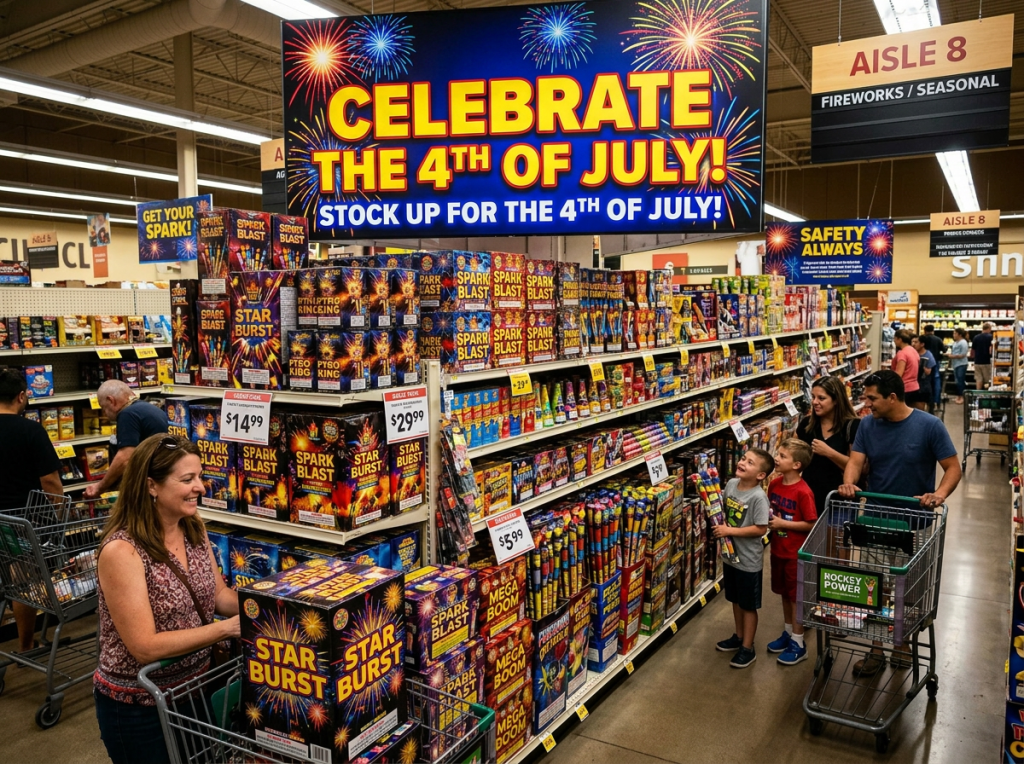
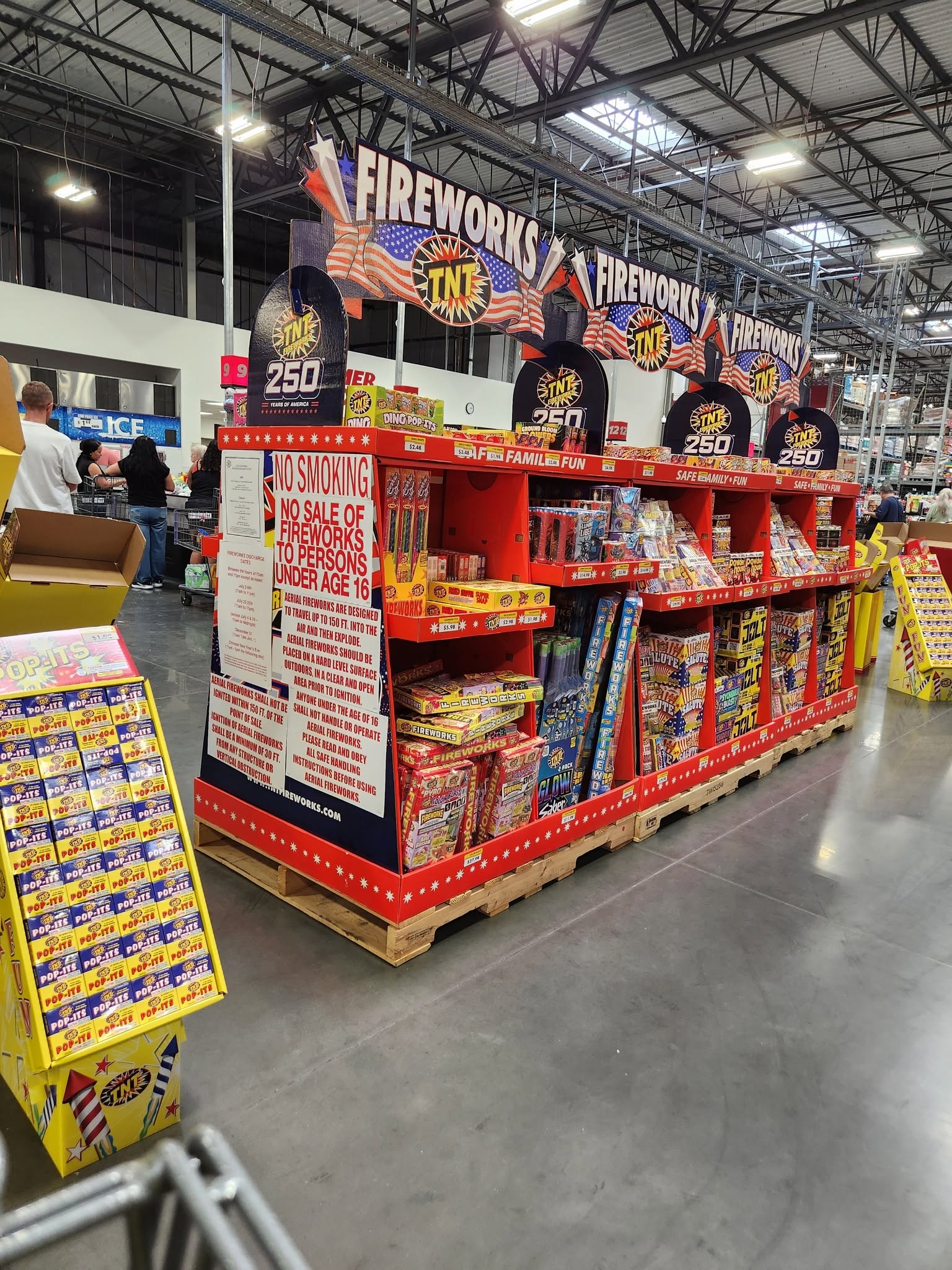
    I have just come home to Salt Lake City and Utah is on fire, and I do not mean this poetically, although honestly, Utah does enjoy making everything biblical and dramatic and vaguely Old Testament in July, so here we are, once again, surrounded by dry grass, hot wind, evacuation alerts, smoke maps, firefighters working themselves into ash-covered saints, dogs hiding under beds, veterans and refugees and babies and every person with a nervous system bracing for the nightly neighbourhood reenactment of “freedom,” while fireworks are stacked for sale in the aisles of the grocery store as if this is perfectly normal, as if this is not the sort of cognitive dissonance that should make all of us stop next to the ice machine and the rotisserie chickens and the family-size tortilla chips and say, wait, hold on, are we really doing this right now?

    Before anyone starts clutching their sparklers and typing with their thumbs full of liberty, I know what month it is, I know where I live, I know Utah in July is not so much a month as a prolonged ignition ceremony with snack breaks, I know we begin with the 4th of July and then we just keep right on going until the 24th when the pioneers allegedly rolled into this valley, wiped the dust out of their eyes, looked around at all this dry, flammable majesty and said, “This is the place,” which apparently, generations later, has come to mean this is the place where we spend most of July scaring the bejezzus out of every dog, every sweet person with PTSD, every baby trying to sleep, every elder trying to remember what quiet feels like, and every canyon full of sweetgrass waiting for one yahoo with a lighter and a pocketful of constitutional fireworks to become the plot twist nobody needed.

    I am not anti-fire.

    Please.

    Let us not be ridiculous.

    I am a Burner, for fuck’s sake, a woman who has spent a good portion of her adult life hauling water and snacks and weird forms of devotion across a dry lake bed where people build impossible things out of dust and scaffolding and crazy grit and love, then set them on fire under the supervision of people who understand wind, perimeter, safety, ritual, consequence, and the very important difference between sacred flame and Chad from down the street launching aerials into a neighborhood full of juniper while declaring himself a patriot.

    I love fire.

    I love the bloom of fireworks in a night sky when they are handled by professionals who know what they are doing and have permits and water trucks and actual plans that do not begin with “hold my beer” and end with the county sheriff asking everyone to evacuate.

    I love spectacle.

    I love celebration.

    I love light.

    I love the crack and shimmer and gasp of it, the moment when a whole crowd looks up together and forgets for three seconds how divided and tired and mean we have all become.

    What I do not love is carelessness dressed up as tradition.

    What I do not love is selling explosives in grocery store aisles while Utah is literally burning in every direction, while we are watching acres disappear, while animals are running, while people are packing medication and photographs and dog food into cars just in case, while firefighters are out there trying to convince the flames not to become weather, while smoke sits in the valley like an unwanted relative who refuses to leave and makes everyone’s lungs feel personally insulted.

    I do not love the part where we ask for help with one hand and sell the problem with the other.

    FEMA has authorized federal funds to help fight the Iron Fire, which is a sentence I find almost darkly comic in this particular American moment, since depending on which political carnival ride you happen to be strapped into, FEMA is either a vital public agency or a government bogeyman hiding under the bed with your tax dollars, but apparently when the hills are on fire we all remember very quickly that mutual aid is not communism, it is what keeps the flames from eating the next ridge.

    And still, here we are, Utah, with the fires burning and the air turning into a throat lozenge from hell, selling fireworks next to the groceries, smiling brightly through the smoke, acting as if we can call something a national emergency and then we spin around and hand out spark boxes with patriotic branding and a coupon for more for the arrival of all those pioneers.

    I do not think we get to have it both ways.

    I really don’t.

    I do not think we get to say we love this place, we love these mountains, we love these canyons, we love this big dry weird holy bowl of a valley, we love our families, we love our neighbors, we love our firefighters, we love our dogs, we love our veterans, we love our freedom, we love our pioneers, we love our heritage, we love our God, we love our country, and then spend the hottest, driest, most flammable weeks of the year treating the entire state as if it is a disposable party favour wrapped in red, white, and boom.

    I know fireworks are legal.

    So are many dumb things.

    Legal is not the same as wise.

    Legal is not the same as kind.

    Legal is not the same as neighbourly.

    Legal is not the same as, perhaps we should not tempt the desert into becoming a funeral pyre just so Kyle can light the “Mega Patriot Screaming Eagle Thunder Dragon 5000” in the cul-de-sac while everyone’s Labrador trembles behind the washing machine.

    This is the part where someone will tell me I am trying to ruin everyone’s fun, which is hilarious, truly, since I am a woman who believes very deeply in fun, possibly too deeply, a woman who has built entire temporary civilizations around coffee, glitter, grilled cheese, electrolytes, radical hospitality, art, dust, nakedness, body joy, and the spiritual necessity of occasionally doing something weird under the stars, but I also believe fun has to survive contact with the actual world, and the actual world right now is hot and dry and on fire and full of living creatures who did not volunteer to become collateral damage in Utah’s annual month-long pyrotechnic identity crisis.

    I am asking for restraint.

    Not forever.

    Not joylessness.

    Not a statewide ban on wonder.

    Just the tiniest little teaspoon of common sense stirred into the Pioneer Day punch bowl.

    Maybe this year, while the fire crews are out there doing the kind of work most of us cannot even imagine, while families are refreshing containment maps, while the air smells wrong, while the mountains stand there looking dry and tired and entirely too ready to go up if we breathe on them funny, maybe we could decide that freedom also includes the freedom not to light shit on fire.

    Maybe we could decide that being a good neighbour matters more than making the sky explode from your driveway.

    Maybe we could decide that dogs and babies and veterans and refugees and exhausted people and traumatized people and firefighters and wildlife and lungs and canyons and whole communities deserve one July where we do not confuse noise with patriotism and sparks with devotion.

    Maybe we could put the fireworks back on the shelf and go eat pie.

    Maybe we could stand outside and look at the mountains, while we still have mountains to look at, and remember that they are already dramatic enough.

    Maybe we could wave a flag without setting the hillside on fire.

    Maybe we could let July be July without turning every night into a tiny war.

    Maybe we could be brave enough, just this once, to celebrate by not making anything worse.

    I know.

    Radical.

    Possibly un-Utahn.

    Someone alert the Governor.

    But here I am, home again, looking at fireworks for sale in the grocery store while the state burns around us, and all I can think is that irony has finally put on boots, walked into the aisle, picked up a box of TNT Pop-Its, and asked all of us whether we have completely lost the plot.

    And honestly?

    I think the answer might be yes.

    But we could still choose differently.

    We could still choose the mountains.

    We could still choose the dogs.

    We could still choose the firefighters.

    We could still choose the air.

    We could still choose not to be the spark.

    Wouldn’t that be something?

  • A Warehouse Is For Freight, Not Families

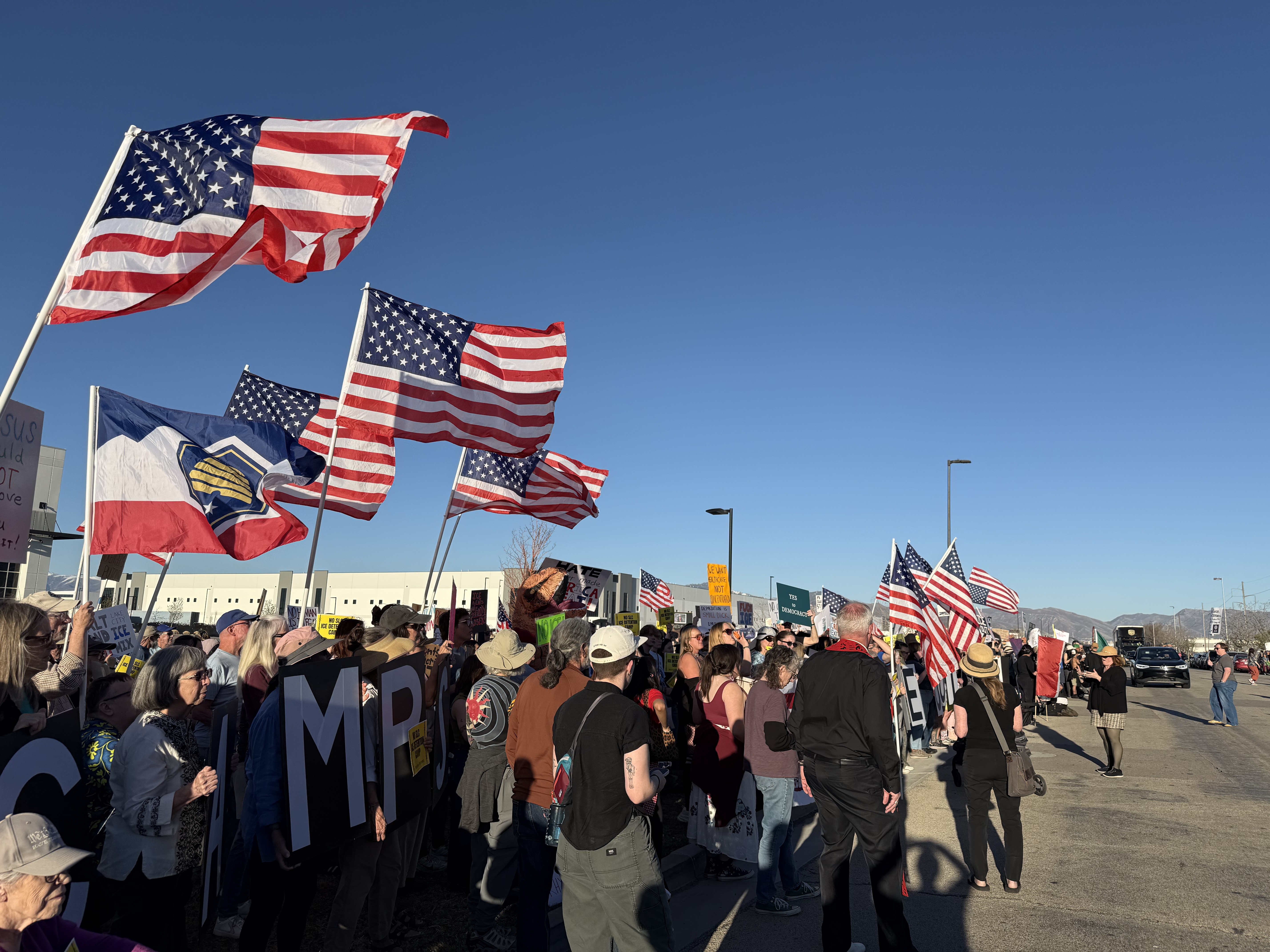
    Yesterday I stood on the far west side of Salt Lake City, staring at a gigantic empty warehouse the Department of Homeland Security bought for $145 million, with plans to turn it into an ICE detention center. A warehouse. Near our airport. In our city. As though human beings are inventory. As though the right word is “facility” and not what it really is: a place built to disappear people behind walls and fluorescent lights.

    Let’s start there. Warehouses are for packages. Not for people.

    Salt Lake City’s mayor has already said what should be obvious to anyone with a pulse: mass detention inside a warehouse is inhumane, outside the city’s zoning allowances, and contrary to the values of Salt Lakers. She is right. Full stop.

    And the obscenity of the timing should make every Utahn furious. Homeland Security has somehow found $145 million to buy an empty building for detention expansion while the department’s own budget fight has left TSA officers working without pay. Tens of thousands of airport security officers have been showing up unpaid, absences have surged, and some airports have faced serious disruptions. So let me get this straight: there is money for cages, money for contracts, money for detention infrastructure, but not enough political courage to pay the people keeping airports running? That is not governance. That is moral failure with a spreadsheet.

    Utah should know better.

    This is a state with a living memory of Topaz, where Japanese Americans were incarcerated behind barbed wire in one of the worst civil-rights violations in this country’s history. They were never charged. Never convicted. Just removed, confined, and treated as a problem to be managed. If you think history repeats itself with the exact same haircut, you have not been paying attention. History comes back wearing a lanyard, holding a procurement document, calling the camp a warehouse conversion.

    And this land was not ours to begin with. The Salt Lake Valley has long been a gathering place for Indigenous peoples. This is the traditional and ancestral homeland of the Shoshone, Paiute, Goshute, and Ute Tribes. We are on borrowed land, whether or not that phrase makes people squirm in their expensive boots. The least we can do is refuse to add one more chapter of sanctioned cruelty to soil that has already held too much.

    Standing there yesterday, I realized something uncomfortable: outrage alone is no longer enough. We know how to chant. We know how to hold signs. We know how to post the photo and go home. But the image that stayed with me was not the rally as it was. It was what it could have been: a living human chain around that building. Bodies linked arm in arm. A fence made of conscience. A line that said, in the oldest language there is, No. Not here. Not in our name.

    I have done this before in other fights. I have put my body where my values were. I have stood in the road for old-growth forests. I have blocked entrances where animals were being tortured in the name of research. I have been arrested for refusing to move while weapons were being built. None of that came from some romance about confrontation. It came from understanding that sometimes the body is the last honest instrument left. Sometimes you do not merely raise your voice. Sometimes you physically interrupt the machinery.

    That does not mean performative menace. It does not mean trying to out-tough the state by dressing like a junior militia and smashing windows. A very small group at the protest seemed to think covered faces, body armor, graffiti, and property damage were the message. They were wrong. Utah will not be moved by cosplay intimidation. Broken glass does not build a broader coalition. It hands the story to the people who would much rather talk about vandalism than detention. I understand the rage. I do. But if your politics make you look like a mirror image of the force you claim to oppose, then you have already wandered off the path.

    What wins here is not theater. It is moral clarity.

    What wins here is grandmothers, veterans, students, clergy, tribal voices, teachers, artists, airport workers, neighbors, and yes, the loudmouth dog mamas too, showing up again and again with enough discipline to make the truth impossible to ignore. What wins here is refusing the lie that this is normal, or necessary, or inevitable. What wins here is making Utah look directly at what is being built and asking: Is this who we are now?

    I do not believe it is.

    I believe Utah can still choose decency over fear. I believe Salt Lake City can reject the idea that people should be warehoused three miles from an airport like delayed freight. I believe we can remember Topaz not as a museum field trip, but as a warning. I believe we can honor this land by refusing to make it host one more machine for disappearing human beings.

    Enough is enough.

    You can build a warehouse. You can hire guards. You can print forms and call it policy. But you cannot make a cage moral by giving it a budget line and a neutral-sounding name.

    Utah has seen this kind of shame before. We do not need a sequel.

  • Pockefuls of Dr. King

    Pockefuls of Dr. King

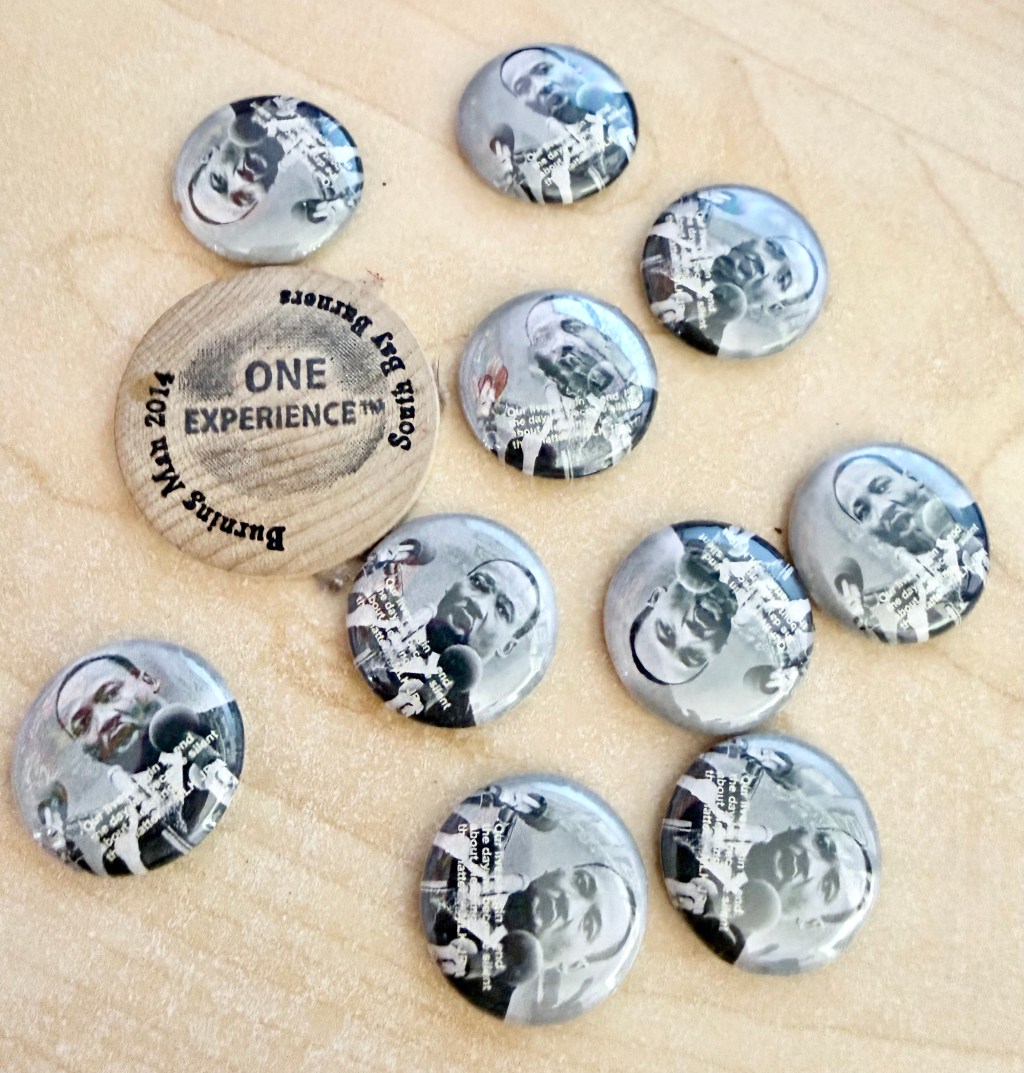
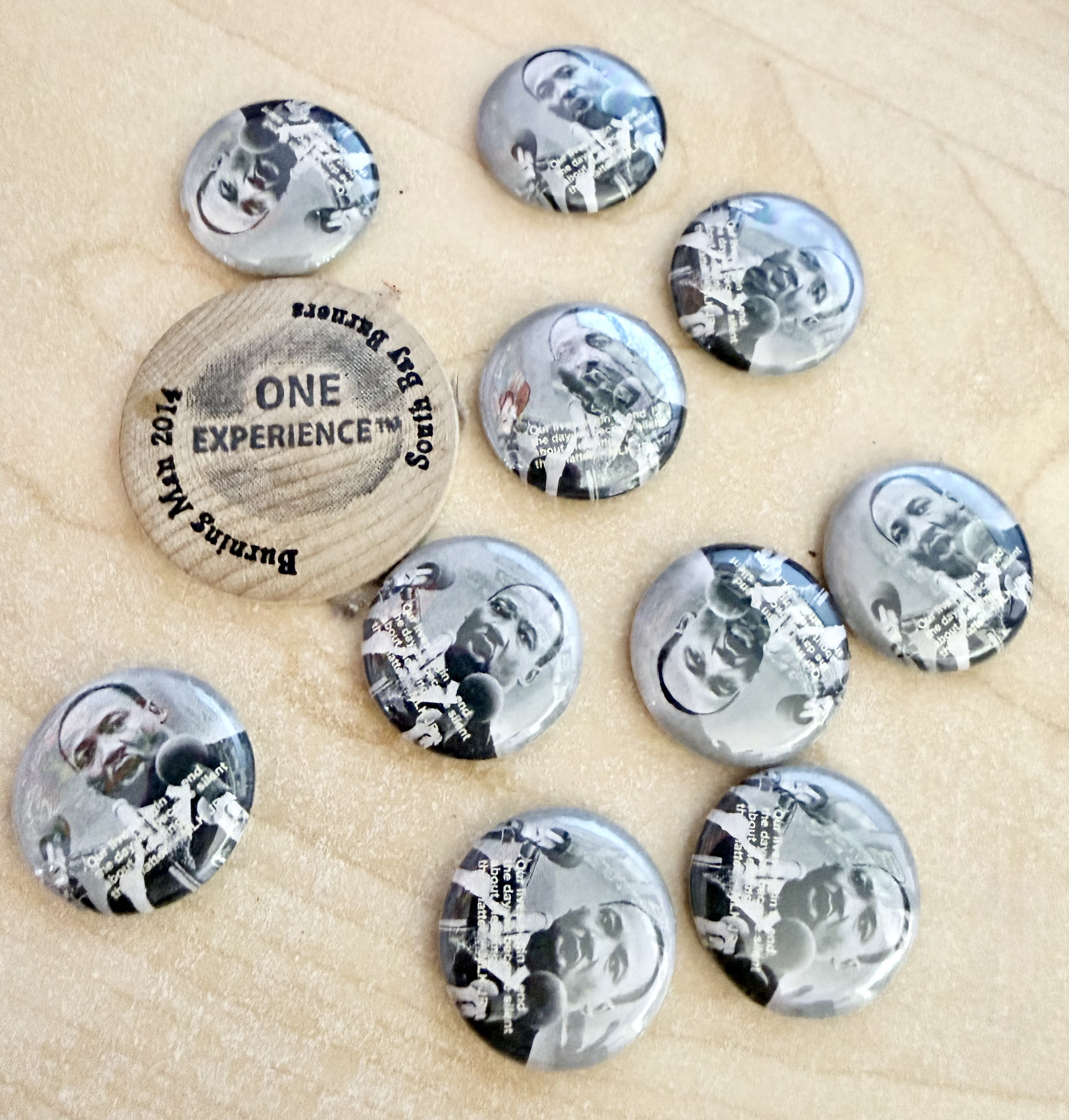
    Every MLK Day, these buttons come out like a small, shining ritual.

    Black-and-white Martin Luther King Jr. quote buttons on a wooden surface, next to a “ONE EXPERIENCE” button.

    Like: keys, chapstick, dog treats, and then… pocketfuls of Dr. King.
    I hand them out while I’m out doing service, because sometimes the only thing I can offer is a reminder you can pin to your chest. A little metallic permission slip to be brave in public.

    These were inspired by my sweet friend Dave Winer (thank you, Dave, for the nudge and the spark). And now I’ve got so many of them. I keep them like talismans. I keep them like seeds.

    The quote on the buttons says:

    “Our lives begin to end the day we become silent about things that matter.”

    Whew. Right?

    Not going to lie: we are in troubled times in this country.
    Troubled like the air before a storm. Troubled like the kind of quiet that isn’t peace, it’s paralysis.

    And I can only imagine what Dr. King would have to say if he could scroll our feeds and watch our headlines and listen to the ways we talk ourselves out of action because we’re tired or scared or numb or “it won’t matter anyway.”

    But one thing I’m certain of: he would still be asking us the same question.

    What are you doing for others?
    How are you showing up?

    It’s the question I ask myself every single day. Not as a performance. Not for gold stars. Not for the internet.
    Just as a compass. A way to keep my heart from going silent.

    So if you see me out there, doing my small bit of service with Clyde energy in my step (or without him, if it’s one of those days), and I offer you a button… take one. Pin it on. Carry it forward. Hand it to someone else when the moment asks for it.

    Because we are all having one experience here.
    And I don’t want to sleepwalk through mine.

    xo
    Nakedjen

  • Her Name Was Renee Nicole Good

    Her Name Was Renee Nicole Good

    This Did Not Have to Happen

    (and this is where I am placing my attention today)

    Her name was Renee Nicole Good.

    She was a prize-winning poet.
    A legal observer.
    A woman who spent her life taking care of other people.

    Yesterday, she was killed while doing exactly that.

    She was not armed.
    She was not threatening anyone.
    She was not looking for a fight.

    She was there to witness. To observe. To make sure that what was happening was seen and recorded and not erased. She was doing the quiet work that keeps the rest of us honest. The kind of work that rarely gets thanked and too often gets punished.

    This did not have to happen.

    I can’t stop thinking about how familiar she feels to me. A good life, but a hard one. A person who stayed tender in a world that rewards armor. Someone who showed up, again and again, even when it cost her something. Especially when it cost her something.

    We are living in a time when violence feels ambient. Like weather. Like background noise. It seeps into places that are supposed to be safe. Churches. Schools. Sidewalks. Courtrooms. Places of worship. Places of care.

    And our nervous systems are wrecked by it.

    If you feel jumpy, exhausted, angry, numb, or scared, you are not broken. You are responding appropriately to a world that keeps asking us to metabolize the unbearable and then move on as if nothing happened.

    What makes this loss so heavy is not just that Renee is gone. It’s that we’ve been taught to accept this as normal. To respond with sorrow but not with change. To call it a tragedy instead of naming it for what it is: the foreseeable result of choices we keep making.

    This is not about politics.
    It’s about how we value human life.

    It’s about whether we are willing to protect the people who show up with notebooks instead of weapons. Whether we believe that witnessing, caregiving, and accountability deserve safety. Whether we are brave enough to say, out loud, that this way of living is not okay.

    Renee was not reckless.
    She was not naïve.
    She was not trying to be a symbol.

    She was doing her job.
    She was doing her calling.
    And she should be alive today.

    So here is my very human, very non-partisan ask:

    Slow down.
    Pay attention.
    Refuse to normalize what is breaking us.

    Talk to your people.
    Check on your neighbors.
    Support the caregivers, the observers, the poets, the ones who show up with open hands instead of clenched fists. Choose de-escalation when you can. Choose care when it’s available. Choose to notice.

    This is where my Love Is Still Beating practice comes in.

    Every day, I’m committing to naming ten real, verifiable good things that happened in the last 24 hours. Not to deny the grief. Not to look away from the fire. But to remember that love is still moving through us, even now. Especially now.

    Today, one of those ten is this:
    People like Renee exist.
    And they matter.

    Say her name.
    Honor her life by refusing to accept her death as inevitable.
    Let your heart stay open, even when it hurts.

    This did not have to happen.
    And we are allowed to demand a world where it doesn’t keep happening.

    **********

    Here’s what you can do, today:

    Pause before you scroll.
    Check on someone you love.
    Offer steadiness instead of outrage.
    Support people who choose care over force.
    Pay attention to what keeps your heart open.

    This is how we push back against a culture of violence.
    One regulated nervous system at a time.

  • Come As You Are

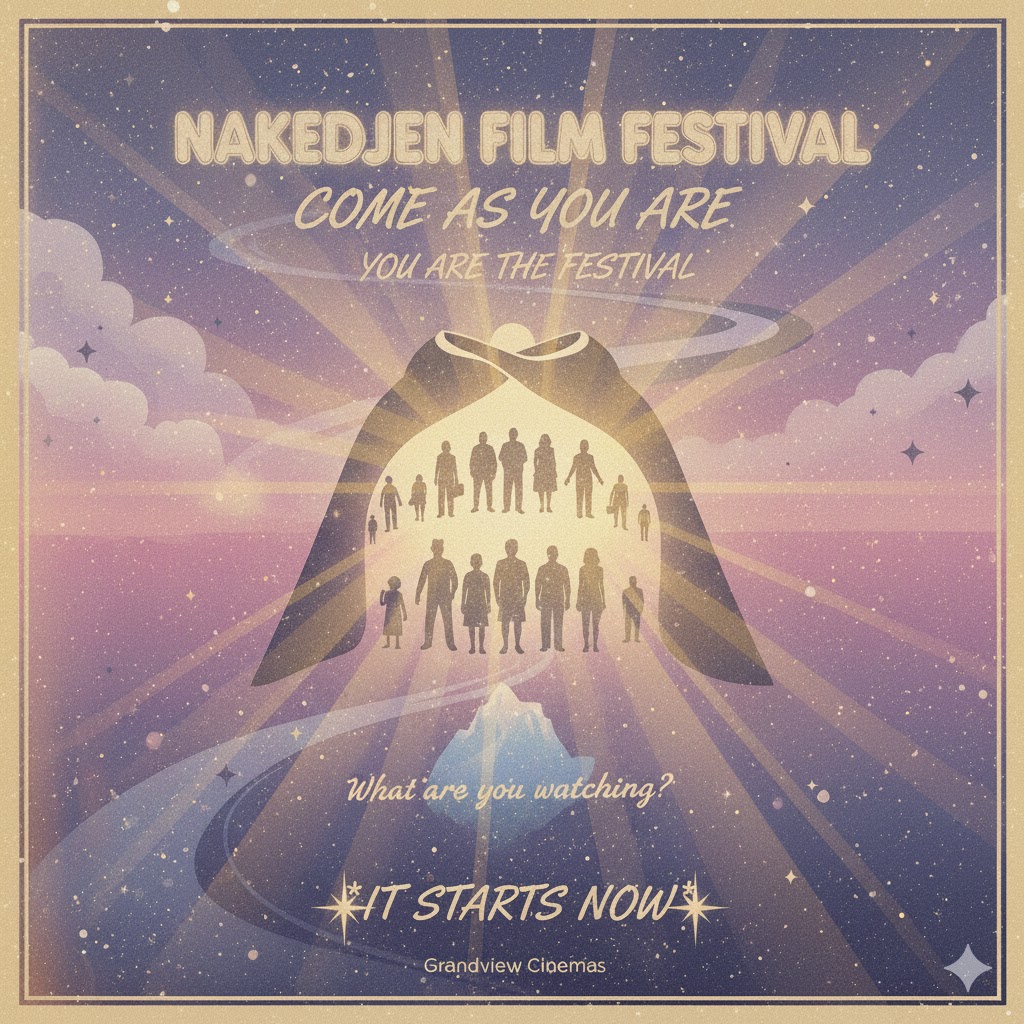
    THE NAKEDJEN FILM FESTIVAL IS OPEN

    This weekend, I spent my days with the unhoused community.
    Cooking real food.
    Passing out warm socks and the right shoes.
    Hauling heavy tarps.
    Listening. Really listening.
    Helping with pets.
    Sorting stories into something that might become actual help.

    It was grounding in the way only service can be.
    Feet on pavement. Hands busy. Heart wide open.

    August was found.
    He is warm. He is safe. He is with his mother.
    I will leave it there.

    What I will say is this: the community that formed around that search is one I treasure deeply. LOVE. All caps. Some of our finest humans. The kind who show up when it’s inconvenient, uncomfortable, and unclear. The kind who do not quit. The Purple Alert is moving forward, and Utah needs it. That matters. That focus matters. That energy matters.

    I also celebrated the Solstice.
    With my professor.
    With my Coffee Garden family.
    Food. Laughter. Candlelight. That quiet, delicious knowing that the light is coming back. Flickering on again. In the sky. In us.

    How blessed am I?
    To be loved this fully.
    To be seen.
    To be held by so many steady, tender hearts.

    Which brings me back here.

    Back to the Nakedjen Film Festival.

    This is not a festival the way you’re thinking.
    There are no velvet ropes. No badges. No gatekeepers.
    There will be a list of suggested films, yes. Because sometimes it’s nice to be handed a menu.

    But let me be very clear:

    You are the festival.
    We are the festival.
    Everyone participates.

    Come as you are.

    Start right now.
    Or wait until Christmas.
    Or stretch it out through the holidaze, because honestly, why rush joy?

    Watch what makes you happy.
    Watch what cracks you open.
    Watch what helps you laugh, breathe, remember yourself.

    Stream something.
    Go to a theater.
    Sit on the floor.
    Invite people over.
    Watch alone and text someone after.
    Let the joy be in the watching, yes — but also in the sharing.
    The conversations.
    The “have you seen this?”
    The quiet miracle of feeling something together.

    This is how we rest without going numb.
    This is how we stay human.
    This is how we keep our hearts from hardening.

    So come as you are.
    Bring your weariness.
    Bring your love.
    Bring your grief and your laughter and your popcorn.

    The Nakedjen Film Festival is open.
    No end date.
    No dress code.
    Just a warm light in the dark, and room for everyone.

    We can begin.


    🍿 THE NAKEDJEN FILM FESTIVAL
    Come As You Are • Where to Watch • How to Watch

    No gatekeeping. No pressure.
    Press play when you’re ready. Pause when you need to.
    Share what moves you.

    🖤 IN HONOR OF STORY, LOVE, AND ENDURANCE

    The Princess Bride
    How: Streaming rental
    Where: Amazon Prime Video, Apple TV
    Theatrical: Occasional revival screenings
    Why: Because tenderness, humor, bravery, and devotion still matter. Always.

    🎄 CLASSIC CHRISTMAS (CORRECT, NOT COZY)

    Die Hard
    How: Streaming rental
    Where: Amazon Prime Video, Apple TV
    Theatrical: Seasonal repertory screenings
    Why: Resilience, teamwork, and surviving the impossible. Shoes optional.

    🔥 NOW / NEXT (2024–2025 ENERGY)

    Marty Supreme
    How: Theatrical release
    Where: Independent and arthouse cinemas
    Streaming: Expected later in 2025
    Why: Ambition, masculinity, myth-making, and the cost of wanting more than the room allows.

    Train Dreams
    How: Streaming now
    Where: Netflix (press play, no rental required)
    Theatrical: Festival and limited special screenings
    Why: Solitude, labor, wilderness, and the quiet lives that built this country. A meditation, not a spectacle.

    Goodbye Jane
    How: Streaming now
    Where: Netflix (easy, immediate access)
    Theatrical: Festival and limited release
    Why: Grief, rupture, love after loss. Gentle and devastating in equal measure.

    Past Lives
    How: Streaming
    Where: Paramount+, Amazon Prime Video (rental)
    Theatrical: Occasional revival screenings
    Why: A film that doesn’t fade. It deepens.

    The Holdovers
    How: Streaming
    Where: Peacock, Amazon Prime Video (rental)
    Theatrical: Holiday repertory screenings
    Why: Lonely winters, found family, and the grace of staying.

    🎥 DOCUMENTARIES

    (Because paying attention is an act of love.)

    It’s Never Over: Jeff Buckley
    How: Streaming
    Where: Max (HBO)
    Theatrical: Select documentary screenings
    Why: Genius, ache, devotion to art, and a voice that still echoes.

    20 Days in Mariupol
    How: Streaming
    Where: PBS / Frontline platforms
    Theatrical: Educational and special screenings
    Why: Bearing witness. Not easy. Necessary.

    🌱 GROUNDING / BREATH / HUMANITY

    Perfect Days
    How: Streaming rental
    Where: Amazon Prime Video, Apple TV
    Theatrical: Occasional indie revivals
    Why: Ritual, simplicity, and the quiet holiness of showing up anyway.

    🎞️ NJFF THEMES

    Choose your night by feeling, not by calendar.

    💔 Grief Night
    Goodbye Jane • It’s Never Over: Jeff Buckley • Past Lives

    🔥 Resistance Night
    Die Hard • Marty Supreme • 20 Days in Mariupol

    🌲 Stillness & Solitude
    Train Dreams • Perfect Days

    🫶 Found Family
    The Holdovers • The Princess Bride

    ✨ Art Saves Us
    It’s Never Over: Jeff Buckley • Past Lives

    🫶 FINAL INVITATION

    The Nakedjen Film Festival is not a fixed lineup.
    It is a living, breathing thing.

    Please add your films.
    Share what cracked you open.
    Tell us what made you laugh, rage, soften, or remember yourself.

    Watch alone.
    Watch together.
    Start now. Or Christmas. Or stretch it through the holidaze.

    You are the festival.
    We are the festival.
    Come as you are.

  • Afterwords

    I’m not here to write about how August was found.
    That story is already orbiting the globe, carried by hearts far larger than mine.
    What I need to write — what I must write — is how these last 24 days rearranged me from the inside out.

    Because something in me changed.
    Shifted.
    Cracked open like a geode that didn’t know it was full of light.

    For 24 days, this city — this state — this strange and stubborn place we call home — showed up with a force I was not prepared for. I’ve lived here long enough to be grumpy about it. Long enough to feel like Utah and I have an ongoing feud. But let me tell you something with my whole chest:

    Don’t tell me this city ain’t got no heart.
    I heard it beating. Loud. Unified. Unstoppable
    .

    People I had never met became my family.
    People who shouldn’t have had time made time.
    People who were exhausted kept going.
    People who had nothing still gave everything.
    People who live outdoors — who navigate survival every damn day — carried the torch with a clarity and grace that humbled me to my knees.

    Yesterday, on a hunch that didn’t make sense on paper but burned in my gut, I drove to Redwood Road. I walked into the pockets of humanity we call “the unhoused community,” gently, respectfully, palms open.

    I didn’t demand.
    I didn’t accuse.
    I didn’t interrogate.

    I said, softly, “I know the code. If you’re helping him, you have your reasons. He’s an adult. You don’t owe me anything. But his mother is on day 24 of her own hell, and she just needs to know her son is alive. Please. Let him know she loves him. Let him know it’s okay to check in. That’s all I’m asking.”

    And something changed in the man standing in front of me — not his posture, but his energy.
    It was like watching a lantern ignite behind his ribs.

    He looked at me steady and said,
    “I’ll make sure your message gets where it needs to go.”

    I clasped my hands.
    I bowed my head.
    I whispered, “Thank you.”
    And I walked away.

    Hours later, August was found.
    Not because of me —
    because collective care is a force of nature.

    Because Salt Lake City —
    in all its contradictions, its rough edges, its quiet resilience —
    showed the hell up.

    Because people who live outside, who are dismissed and overlooked and judged daily, were the ones who held the line with the most dignity and strength. They are the heroes of this story.
    Say it out loud.

    And let me tell you what all of this did to me:

    I have been the Chief Love Beet my whole life.
    I show up.
    I take care of people.
    I fix the things I can.
    I hold the ones I love.
    I drag my glittery boots into the dark and try to make it lighter.

    But this?
    This was different.

    This time, I wasn’t the one holding the container — the container held me.

    Salt Lake City held me.
    The volunteers held me.
    The mothers held me.
    The grievers held me.
    The searchers held me.
    The unhoused community held me with a kind of honor I will never forget.

    We cracked our hearts together like a chorus of fault lines.
    We refused to give up.
    We refused to look away.
    We refused to let “impossible” have the last word.

    I am changed.
    I can feel it.
    A new chamber in my heart, carved by 24 days of strangers-turned-family, by the hum of hope vibrating through every street, by the relentless love of a mother who would not stop.

    August is alive.
    And so, somehow, am I —
    in a way I wasn’t before.

    Thank you, Salt Lake City.
    Thank you to every single person who loved outside their bodies.
    Thank you to those who showed up even when it felt impossible.
    Thank you to our unhoused brothers and sisters who carried this story with honor.
    Thank you to the fierce, unshakeable ache that binds us as humans.

    This wasn’t a search.
    This was a remembering.

    We belong to each other.
    Still.
    Always.
    Especially when the world forgets.

  • 💜 Purple Alert: Why I Still Search for August

    💜 Purple Alert: Why I Still Search for August

    People keep asking me why I’m still searching for August.

    Here’s the truest answer I have:
    Because I can. And because I hope you would, too.

    Because if your heart beat just a little louder —
    if you heard a tremor in the universe,
    a missing pulse,
    a soft human who hasn’t come home —
    I like to believe you’d go looking.

    Even if you didn’t know him.
    Even if he was 29, grown, and complicated.
    Even if the world insists adulthood equals safety.
    (Trust me, it doesn’t.)

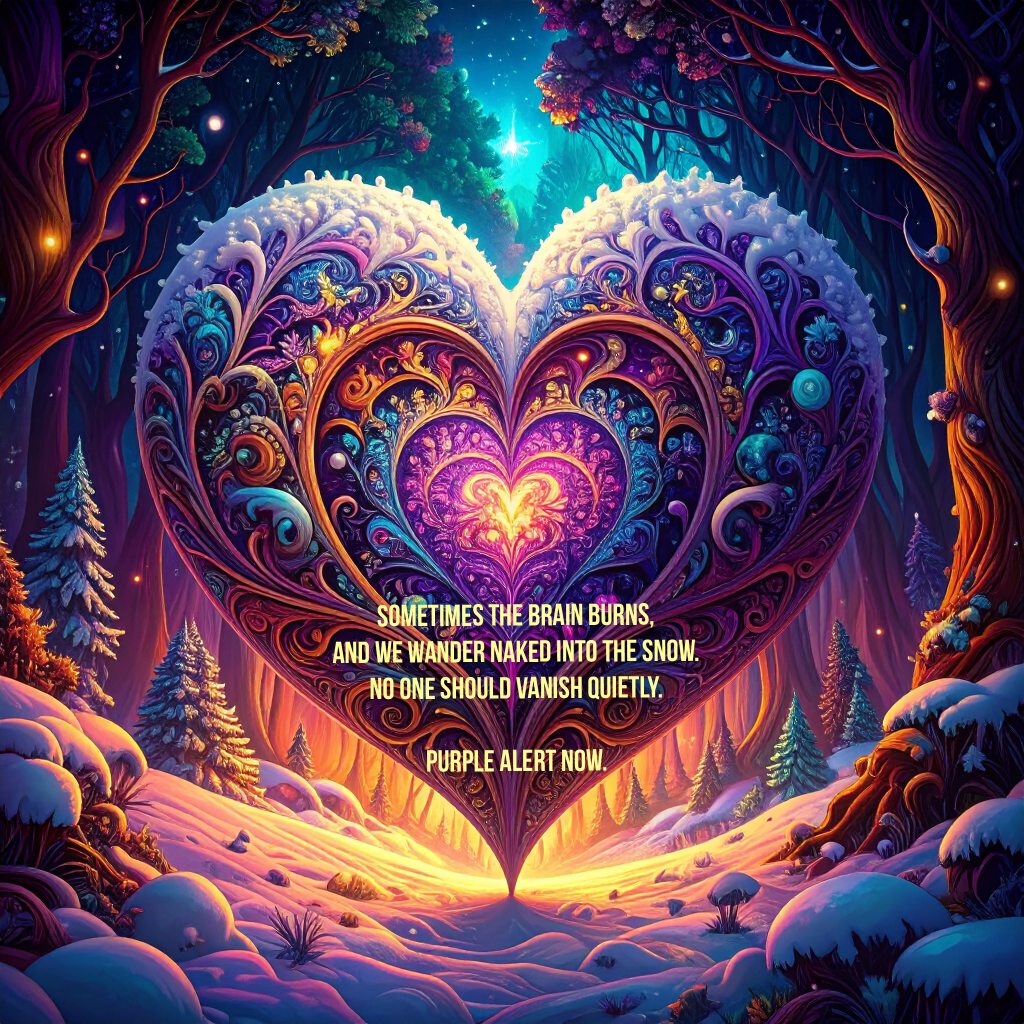
    Sometimes a brain goes haywire.
    Sometimes it lights itself on fire.
    Sometimes a person walks away naked into the snow
    and doesn’t even know they’re gone.

    I know this because once — I was the one who wandered.


    New Year’s Eve, 2008

    (which was technically still 2007 because time is a suggestion)

    I had just moved to Salt Lake City.
    A blizzard.
    No friends yet.
    Just two black labradors — Buddha and Stella —
    who carried my heart on eight paws like it was their holy job.

    I don’t remember the seizures.
    I only remember becoming conscious in the snow.
    Naked. Disoriented. Freezing. Alone.

    Not metaphorically.
    Actually and literally wandering the city,
    no memory of how I got there,
    no idea where “home” even was.

    I saw the glow of a Smith’s supermarket.
    Closed. Empty.
    But a payphone in the vestibule leaked just enough light
    to feel like a lifeline.

    I remembered one number.
    Collect.
    My mother.

    “Mom… I’m naked and cold and I don’t know where I am.”
    “Jennifer, you’re in Utah.”
    “Why would I do THAT?”

    She called emergency services from Maryland.
    She told them where to find her daughter
    wandering state-newborn and soaked in snow.
    They found me.
    They wrapped me in blankets.
    They got me home.

    And when we arrived?
    Every single light in my house was on.
    Front door wide open.
    Two dogs sitting guard — waiting.
    Holding vigil over whatever was left of me.

    If I hadn’t found that payphone,
    if I hadn’t seen those lights,
    if Buddha and Stella hadn’t anchored me to this world,
    if — if — if —

    I could have disappeared.
    Forever.
    Just like that.

    No alert. No network.
    No hey Utah, one of us is missing — go look.

    That is my WHY.

    That is why I search for August.
    Because someone should.
    Because his mother deserves not to wonder.
    Because he deserves to be alive and found if he wants to be.

    Because there is a world where that night was me
    and nobody knew to sound an alarm.


    Utah doesn’t have a PURPLE ALERT.

    But it should.
    Every state should.
    A Purple Alert for adults who wander,
    who are neurodivergent or vulnerable or lost in the fog of a burning brain.
    Not a punishment.
    Not a trap.
    Not a “gotcha.”

    Just a net.
    A community rally.
    A lifeline in the snow.

    It is not a miracle.
    But it could save one life.
    And that is enough.

    I have systems now.
    Layers.
    If I go missing again — alarms will go off.
    Texts will fly.
    People will look.

    Not everyone has that.

    August doesn’t have that.

    He is missing.
    Still.
    And I’m not ready to stop searching.

    If you’re reading this, you don’t have to know August to care.
    You just have to remember something simple:

    There was a night I could have been the one you were searching for.

    And every mother deserves to sleep knowing
    that if her child wanders naked into the snow —
    a city will rise like hands to catch them.

    💜 Utah deserves a PURPLE ALERT.
    💜 August deserves to be found.
    💜 And any one of us could be next.

    If this moved you — share it.
    Talk about Purple Alerts.
    Help me make noise.

    We’re still looking for August.
    Let’s not stop.