Category: Love Is Still Beating

  • The Maps Are Written Across Our Hearts

    The Maps Are Written Across Our Hearts

    Every year when June rolls into July, some part of my nervous system starts looking for Interstate exits, and I do not mean this metaphorically, although perhaps I do because the older I become the more difficult it is to separate the actual road from the one that has been unspooling inside me since 1986, that long ribbon of asphalt and possibility and bad coffee and improbable miracles and the certainty that somewhere beyond the next exit ramp there would be music, or friends, or a circus, or a field, or a dog, or a broken transmission, or Jerry Garcia himself sitting quietly at the center of the whole strange wheel asking us all, quite gently, just how much freedom remained in America and whether we intended to use it.

    July has always felt less like a month and more like a tuning fork struck somewhere deep inside the rib cage, because the body remembers before the brain does, and somewhere around the end of June my internal compass begins spinning wildly, looking for truck stops and ticket stubs and glove compartments full of maps that no longer exist, wondering where the circus is setting up this year, where the bands will bandaloop, how many angels can dance on the head of a pin, whether there is coffee at the next exit, whether there is pie, whether there is a field nearby where tired travellers can throw down sleeping bags and look up at the stars and ask one another the really important questions, such as where did the dog go and who has jumper cables and is there an extra ticket and when exactly did we all decide that strangers were dangerous.

    The Grateful Dead taught me one version of America.

    The parking lot was an experiment, a temporary city appearing overnight on asphalt and empty grassy fields and grilled cheese and optimism, a place where money occasionally mattered and occasionally disappeared altogether, where miracle tickets materialized from thin air and somebody always seemed to have an extra sandwich or an extra blanket or room in the van, where your transmission could fall out in Indiana and a garage owner would stay awake all night teaching you how to repair your own car while his wife fed you dinner and you slept in a cornfield beside the garage listening to the stalks whisper like the Pacific Ocean, and where eventually you discovered that gifts do not come with strings attached, that miracles are often folded inside free tickets, that somebody stops when you are broken down, that somebody shares what little they have, that somebody teaches you how to repair the engine instead of repairing it for you, and that no matter where you go, there you are.

    The Oregon Country Fair taught me another version. Same song, perhaps, but a very different verse.

    You entered through the gates and somebody hugged you and stamped a peach on your arm and said, in one way or another, welcome home, and eventually I tattooed that peach onto my own skin because some religions require baptism and some require communion and some simply place a peach upon your arm and send you wandering through the trees with music and art and children and ice cream and impossible ideas about how human beings might live together if they chose kindness over commerce and curiosity over fear, and somewhere beneath those magnificent fir trees you begin to understand that home is not a place at all but a practice, something we make for one another, something we carry, something we offer.

    In the between times, I found another temporary city in the desert, and what it taught me was not terribly different from the parking lot or the Fair. Build the city yourselves. Bring what you need. Share what you have. Somebody always runs out of water. Somebody always loses their camp. Somebody always breaks down. Somebody always sits beside somebody else beneath impossible stars on what feels like a truly impossible precarious piece of art and says, “I’ve got coffee. Tell me what happened.”

    The band plays its final song. The parking lot empties. The Fair does a final sweep. Jerry dies. The dust doesn’t stay. The map disintegrates in the glove compartment.

    This is what I have been talking about all along.

    The maps.

    Not the maps on our phones. Not the blue dot telling us exactly where we are every moment of every day. I mean the old maps. The Rand McNallys folded into impossible shapes and stuffed into glove compartments until the creases finally split. The state lines and county lines and interstates and back roads and roads that simply ended in gravel and dust and faith.

    My maps.

    The weathered notebook that always traveled beside me, filled with health food stores and diners willing to make grilled cheese after ten o’clock and pay phones that still worked and the woman in Eugene with the extra couch and the basement in Ohio that somehow held all of us and the garage in Indiana and the kitchens where we could always make more sandwiches and fill our coolers with ice and beverages before heading back out onto the road.

    The attic in Pittsburgh where a gaggle of filthy hippies once landed and laughed until morning and where years later, after the roads had bent and folded and delivered me back there carrying an entirely different version of myself, somebody I loved quietly helped put me back together again.

    Those were my maps. Not red states. Not blue states. Not electoral maps. My maps are made of people. The people who stopped. The people who stayed. The people who answered the phone. The people who wrote their numbers on the back of a ticket stub. The people who said, “Call me if you need anything.” The people who said, “If you’re ever passing through.”

    I know this is why our Americas all look different.

    Mine looks like parking lots and Oregon forests and dusty roads and kitchens full of soup and coffee and dogs and people making sandwiches.

    Yours may look like a fishing dock off the coast of Maine. A church basement hosting an NA meeting somewhere in the Carolinas. Your grandmother’s porch with a view. A diner serving pie all night at Exit 141. A station wagon headed west. Or East. Or to catch a baseball game in an endless summer of baseball games. Pick-up trucks to pick up a stray dogs because they need a place to call home.

    The shape of our America is the shape of our own hearts.

    The maps are written there.

    The lines still run from mine to yours and from yours to somebody else and from theirs to a frightened stranger standing beside a highway wondering if anybody will stop.

    I really believe that is what the country has always been.

    Not the lines we draw between ourselves.

    The names we write beside them.

    So, here we are. All of us together inside the largest and strangest experiment of them all.

    America.

    Somewhere, probably even right now, somebody is sitting beside a dark highway with their hazard lights flashing. Somebody is lost. Somebody is afraid. Somebody is wondering if anyone will stop. And somewhere else, perhaps only a mile away, perhaps at the next Interstate exit, perhaps sitting at a kitchen table drinking coffee, perhaps reading this very thing by the light from a cellphone at 2:13 in the morning somewhere outside Winnemucca somebody is already reaching for their keys.

    We all have our roads. We all have our lines. We all have our maps.
    And we all have our exits.

    This is another thing the road taught me. You never really know which exit is yours. You pass hundreds of them. Thousands. Rest areas and truck stops and little towns with one blinking light and pie shops and motels and places you promise yourself you’ll visit someday, and then one day you find yourself taking an exit you never expected because your transmission gave out or your heart broke or somebody got sick or somebody died or somebody called and said, “Can you come?”

    We ride with our hands on the wheel and our hearts beating in our chests and we simply do not know. We do not know if the next exit is ours, or the one after that, or the one two thousand miles down the road. That uncertainty is not the frightening thing. It is the reason for everything.

    I do not know where my exit is, and you do not know where yours is, and America herself does not know where hers is, the whole point is simply how we choose to travel. Choose to show up.

    We do stop. We share our sandwiches. We find the lost dog. We answer the phone. We write our numbers in the margins and on the backs of ticket stubs. We make coffee. We put our hands over our own hearts. More importantly, we put our hands on the hearts of others and ask, “Still beating?”

    Babump.

    Babump.

    Still there.

    This? This is what America needs from us right now. Not spectators. Not passengers. Not people standing beside the road arguing over the map while the engine overheats.

    AMERICA is sitting there herself with her hazard lights flashing and one hand pressed against her chest, and perhaps what she is asking is exactly what every frightened traveler has always asked somewhere beside a dark highway in the middle of the night.

    Is anybody coming?

    Yes. We are. Because this is our country. This is our map. This is our heart.

    The lines still run from my heart to yours and from yours to someone else’s and from theirs to a stranger sitting beside a road somewhere wondering whether anybody will stop.

    And someday, though none of us knows when, we will each take our own exit. Maybe tomorrow. Maybe thirty years from now. Maybe somewhere we never expected. Maybe somewhere we’ve been driving toward all along.

    So while we’re here — while the engine is still running and the coffee is still warm and the maps are still folded in the glove box and the names are still written in the margins and the kitchen lights are still burning and the hearts are still beating — we might as well show up.

    We might as well keep each other breathing.

    That’s it. That’s the whole assignment.

    America needs all of us right now. Every last one. And if you call yourself an American — if you put your hand on your heart and mean it — then that means you.

    So pull over. 💜

  • Still Here. Barely.

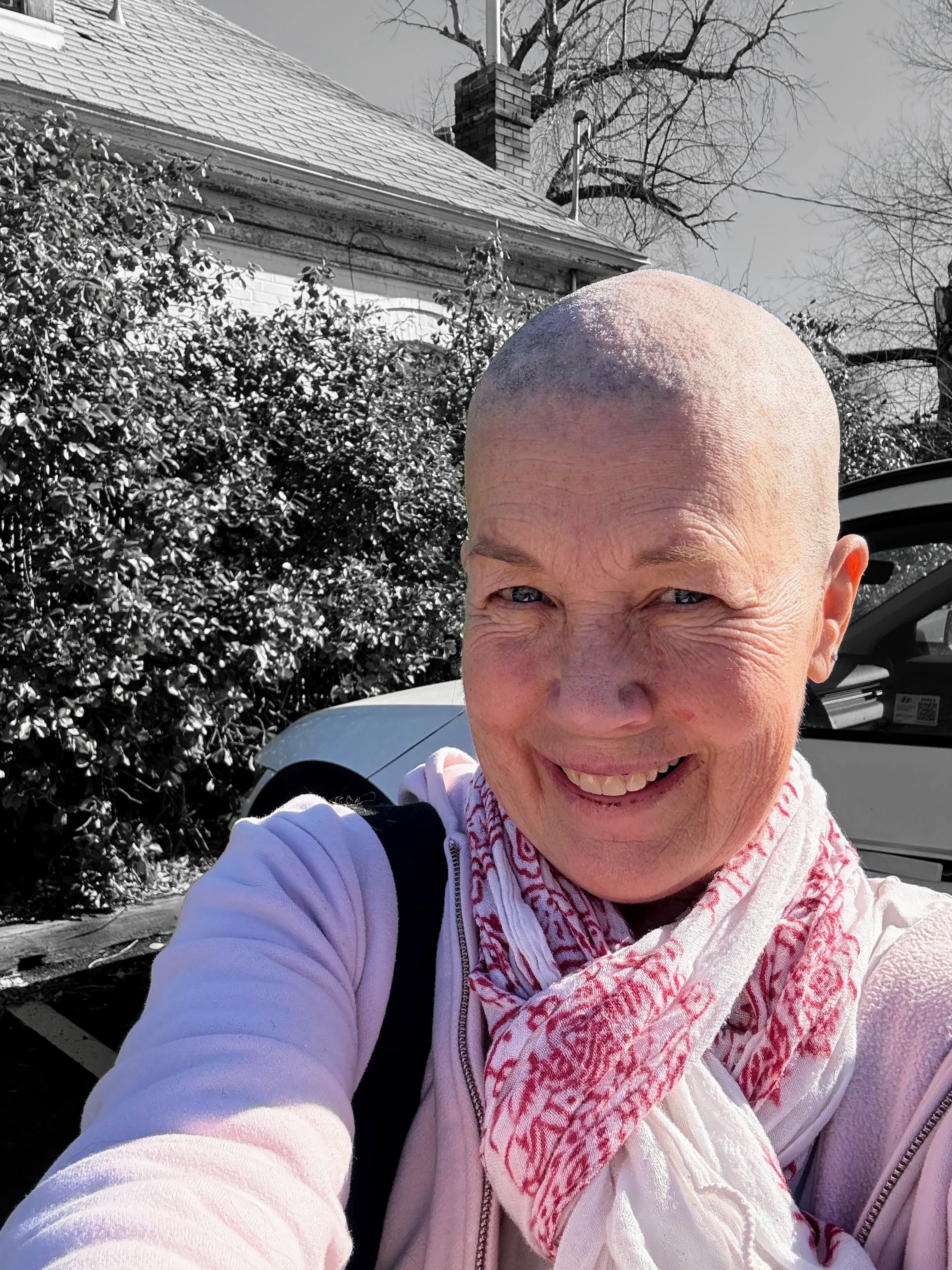
    I shaved my head last Monday.

    Not for fashion. Not for a dare. Not for reinvention as some shiny little brand strategy.

    I did it because my body needed a receipt.
    Because my heart kept whispering, we are letting go now, and I needed my scalp to sign the paperwork.

    Gizmo died.

    Sundance ended. Not just the festival, but the way of it here. The particular Utah snowglobe version where I knew the back hallways, the green rooms, the secret shortcuts, the faces that needed feeding, the ones that needed a tissue, the ones that needed a firm hand on the shoulder and a “drink some water, babe, I’ve got you.” Ten days of taking care of everyone… and then suddenly the lights go out and you’re standing in a quiet room full of empty chairs, holding a lanyard like it’s a relic.

    And Burning Man? I closed that chapter too. I am not going back this year. I can feel the hinge click. I can feel the door seal. I can feel the desert wind on the other side and I’m not stepping into it. I’m finished. I’m choosing something new even though I don’t yet know what “new” looks like.

    Also, because life has a sense of timing that is either comedic or cruel (or both), my credit card got compromised. So this morning I drove to the bank, bald as bald can be, and I started thinking about what it would be to make a documentary of my life.

    Not the highlight reel. Not the montage where the camera pans across costumes and concerts and glamorous chaos.

    More like… the witness list.

    Because if you really wanted to tell the story of me, you would have to find the people I have helped along the way. The ones who would say: she showed up. She filled the gap. She made it happen. She walked into the mess and started organizing the corners. She brought the water. She brought the snacks. She brought the extra phone charger, the spare hoodie, the peppermint oil, the hand on your back when you were about to fold.

    I’m the fill-in-the-blank fairy.

    Sundance Fairy.
    Fluffer Fairy.
    Share Your Sandwiches Fairy.
    Missing-person search Fairy.
    “Let me just handle it” Fairy.
    “Here, eat something” Fairy.
    “Breathe with me” Fairy.

    And I never, ever, ever accept payment. I have built an entire life on the belief that if I keep giving, the universe will keep providing, and maddeningly… it does. It really does. Doors open. Tables appear. Someone hands me exactly what I need right when my hands are empty.

    I’ve trusted that so hard that it became my religion.

    Even back on Grateful Dead tour, even in those long-ago days when everything was loud and wild and starry and half-improvised, I was still taking care of people. I made Clyde’s Cookies on tour, vegan, organic chocolate chip cookies, because I needed a way to support myself, yes, but also because it was a survival mechanism. A nervous system strategy. A way to stay steady in the swirl. A way to love people and the planet at the same time. Those cookies ended up in cafés all over Santa Cruz even when the Dead weren’t touring. Little brown-sugar love letters in a world that moves too fast.

    I have been in service most of my life. I don’t say that with a halo. I say it with the honesty of someone who knows service can be both medicine and the perfect hiding place.

    Because here’s the part I’m trying to tell the truth about:

    Right now, I feel broken.

    Like… really broken.

    Not “I’m having a hard day” broken. Not “I just need a bath and a nap” broken.

    More like: I cry over silly things. A song lyric. A dog on a porch. A stranger’s hands. The way light hits a kitchen counter. I cry because my heart is full of endings and my body doesn’t know where to put them. I cry because I can’t fix any of the big things right now, and I am a person who has built a whole identity around fixing. I just can’t seem to find the Nakedjen superglue AND the duct tape.

    The world is hurting. It really and truly is. There is a real revolution happening and I am paying attention. I am not looking away. I can feel the instability in the air like static. I can feel the grief in the streets. I can feel the fear. I can feel the fire. Sometimes it feels like the whole planet is holding its breath, waiting to see who will choose cruelty and who will choose care.

    I want to be the person who chooses care.

    I am still that person.

    I’m just… shaky.

    I’m alive, but barely. Tender as an overcooked beet. Raw in a way that surprises me. Not numb, not detached, not checked out.

    Just open. Too open. All nerve endings.

    So this is me, leaving a little note on the community bulletin board of the internet:

    Hi. It’s Nakedjen.
    My head is bald. My heart is bruised. I’m still here.
    I don’t know what’s wrong with me, but I know something is happening in me. Something is changing shape.

    If you’re reading this and you’re also crying in grocery store aisles, or feeling oddly fragile in the parking lot, or standing in the doorway of your own endings… come sit by me.

    No fixing required.

    Just the quiet promise that we are not alone in this, even when we feel like cracked glass.

    And if the universe has been kind enough to keep meeting me in the moments when I’m empty, then maybe it will meet me here too.

    Maybe it will meet all of us here.

    One breath at a time.

  • Her Name Was Renee Nicole Good

    Her Name Was Renee Nicole Good

    This Did Not Have to Happen

    (and this is where I am placing my attention today)

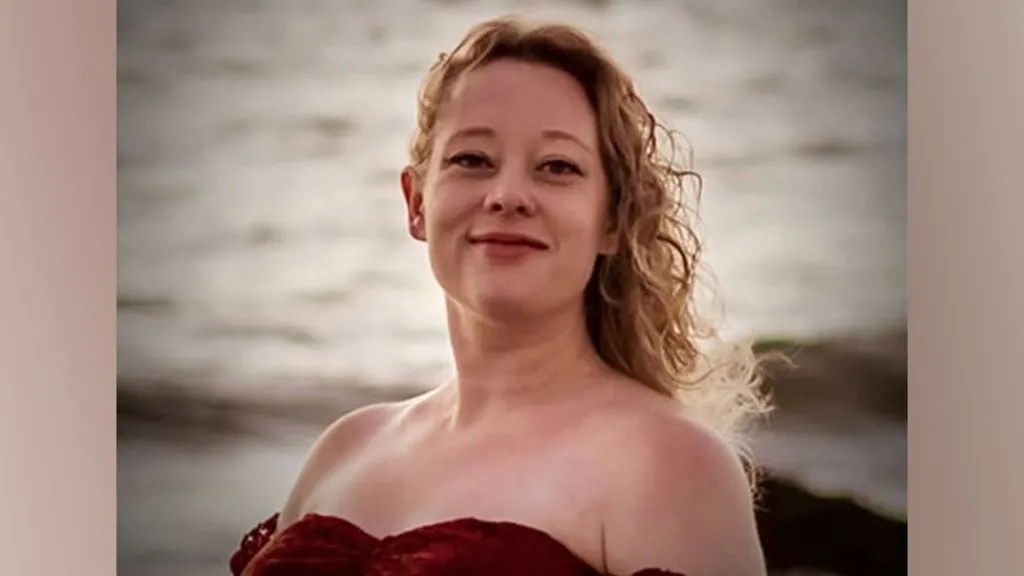
    Her name was Renee Nicole Good.

    She was a prize-winning poet.
    A legal observer.
    A woman who spent her life taking care of other people.

    Yesterday, she was killed while doing exactly that.

    She was not armed.
    She was not threatening anyone.
    She was not looking for a fight.

    She was there to witness. To observe. To make sure that what was happening was seen and recorded and not erased. She was doing the quiet work that keeps the rest of us honest. The kind of work that rarely gets thanked and too often gets punished.

    This did not have to happen.

    I can’t stop thinking about how familiar she feels to me. A good life, but a hard one. A person who stayed tender in a world that rewards armor. Someone who showed up, again and again, even when it cost her something. Especially when it cost her something.

    We are living in a time when violence feels ambient. Like weather. Like background noise. It seeps into places that are supposed to be safe. Churches. Schools. Sidewalks. Courtrooms. Places of worship. Places of care.

    And our nervous systems are wrecked by it.

    If you feel jumpy, exhausted, angry, numb, or scared, you are not broken. You are responding appropriately to a world that keeps asking us to metabolize the unbearable and then move on as if nothing happened.

    What makes this loss so heavy is not just that Renee is gone. It’s that we’ve been taught to accept this as normal. To respond with sorrow but not with change. To call it a tragedy instead of naming it for what it is: the foreseeable result of choices we keep making.

    This is not about politics.
    It’s about how we value human life.

    It’s about whether we are willing to protect the people who show up with notebooks instead of weapons. Whether we believe that witnessing, caregiving, and accountability deserve safety. Whether we are brave enough to say, out loud, that this way of living is not okay.

    Renee was not reckless.
    She was not naïve.
    She was not trying to be a symbol.

    She was doing her job.
    She was doing her calling.
    And she should be alive today.

    So here is my very human, very non-partisan ask:

    Slow down.
    Pay attention.
    Refuse to normalize what is breaking us.

    Talk to your people.
    Check on your neighbors.
    Support the caregivers, the observers, the poets, the ones who show up with open hands instead of clenched fists. Choose de-escalation when you can. Choose care when it’s available. Choose to notice.

    This is where my Love Is Still Beating practice comes in.

    Every day, I’m committing to naming ten real, verifiable good things that happened in the last 24 hours. Not to deny the grief. Not to look away from the fire. But to remember that love is still moving through us, even now. Especially now.

    Today, one of those ten is this:
    People like Renee exist.
    And they matter.

    Say her name.
    Honor her life by refusing to accept her death as inevitable.
    Let your heart stay open, even when it hurts.

    This did not have to happen.
    And we are allowed to demand a world where it doesn’t keep happening.

    **********

    Here’s what you can do, today:

    Pause before you scroll.
    Check on someone you love.
    Offer steadiness instead of outrage.
    Support people who choose care over force.
    Pay attention to what keeps your heart open.

    This is how we push back against a culture of violence.
    One regulated nervous system at a time.