Category: Protest

  • Please Vote

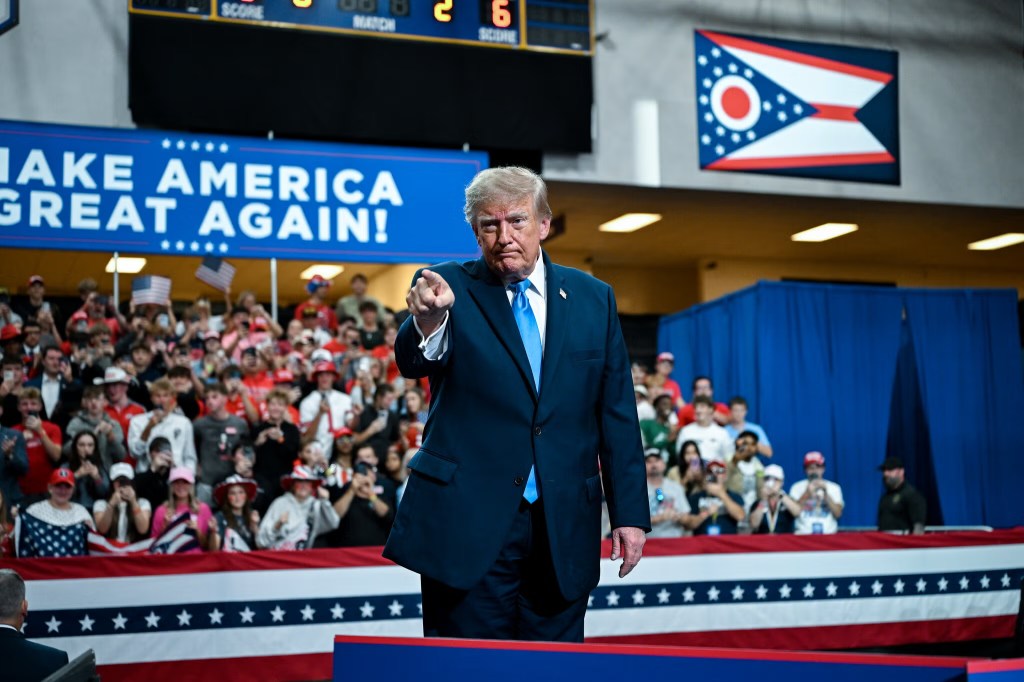
    Donald Trump gestures towards the camera during a rally, with a crowd of supporters in the background and a banner reading 'MAKE AMERICA GREAT AGAIN!'

    Pretend, please, that I am on the ballot.

    That’s Donald Trump, asking his voters to show up in November.

    Okay.

    I can do that.

    In fact, I think we should take him very seriously, because Donald Trump spent years insisting that the health of the President was absolutely, undeniably, urgently our business. Joe Biden was too old. Biden shuffled. Biden stumbled over words. Biden looked tired. Biden forgot things. Every pause, every step, every facial expression and verbal detour became material for national examination and, often, ridicule.

    So if Trump would now like to place himself metaphorically on every ballot in America, we should extend him exactly the same courtesy.

    I am not diagnosing the man from photographs. I have no idea what a bruise means beyond what his doctors tell us it means, and neither does anyone watching from a couch with the miraculous medical degree that apparently arrives free with every social media account.

    But Donald Trump is eighty years old, President of the United States, and the same man who told us this scrutiny mattered.

    Fine.

    You wanted the stethoscope on Biden.

    Do not put it away now.

    I want meaningful medical disclosure. I want journalists to ask questions without the question itself being treated as treason. I want the same curiosity, the same scrutiny, and the same fucking measuring stick.

    Let’s notice what he’s really saying. He’s saying his people only show up when he’s on the ballot. He’s asking them to pretend, because he knows the whole machine runs on whether you decide to stay home.

    Hold that thought.

    While we have the stethoscope out, I would like to use it on AMERICA.

    I am considerably less interested in whether America is GREAT than I am in whether America is WELL.

    Trump is enormously proud of his beautiful ballroom, his gilding, his chandeliers, his curtains. I keep thinking about the curtain. Not the one hanging in the ballroom. The much bigger one, the one hanging in front of all of our eyes.

    Pull it back.

    Can people buy groceries without standing in the aisle doing math in their heads? Can they afford the house they already live in? Can they see a doctor without checking the bank account first? Are our old people being cared for? Are our children okay? Can women tell the truth about what happened to them without somebody immediately searching for the hole in their story? Can we hold an election, lose, feed the dog, get up the next morning, and keep living beside people who voted differently than we did?

    Are our institutions healthy?

    Are WE?

    Or have we gotten so used to making ourselves smaller that we call surviving a victory?

    Here’s what makes that so hard to answer:

    We can’t catch our breath long enough to try.

    We are being bombarded. BOMBED, really. Not with one big explosion you’d see coming, but with a barrage, one blast after another after another, delivered straight into the palm of your hand.

    BREAKING.

    EMERGENCY.

    LOOK HERE.

    BE AFRAID.

    You’re still reeling from the first one when the second lands. You haven’t finished being horrified when the third one hits. Spin. Scandal. Outrage. Distraction. All of it arriving so fast that nobody gets to stand up, brush off the dust, and ask the only question that matters:

    What do I do about this?

    That’s not an accident.

    That’s the design.

    BREAKING. EMERGENCY. LOOK HERE. BE AFRAID. BREAKING. EMERGENCY. LOOK HERE.

    KEEPING US FURIOUS FOR ELEVEN SECONDS AT A TIME.

    Long enough to react. Never long enough to organize. Long enough to share the post and type something at 11 p.m. Never long enough for the anger to cool into a plan.

    A person who can’t breathe can’t think, and a person who can’t think is awfully easy to steer.

    So breathe.

    Right now. All the way down.

    Then use it.

    Countries have bodies, too. They carry wounds. They compensate for injuries until the compensation becomes the next injury. Eventually somebody has to stop admiring the chandelier and look at the patient.

    Donald Trump says PLEASE PRETEND.

    No.

    We are all going to stop pretending. We are not five.

    Look behind the curtain.

    Look at him.

    Look at us.

    Then put down the fucking phone long enough to remember that your outrage has a job, and the job is waiting for you on November 3rd.

    Check your registration. Today, not “soon.” Make a plan for how you’re voting, when, and with whom. Text the friend who always says it doesn’t matter. Drive the neighbor who doesn’t have a ride. Bring snacks. Stay hydrated. Remember to BREATHE.

    Don’t pretend anyone’s on the ballot.

    SHOW UP.

    VOTE. đź’ś

  • A Warehouse Is For Freight, Not Families

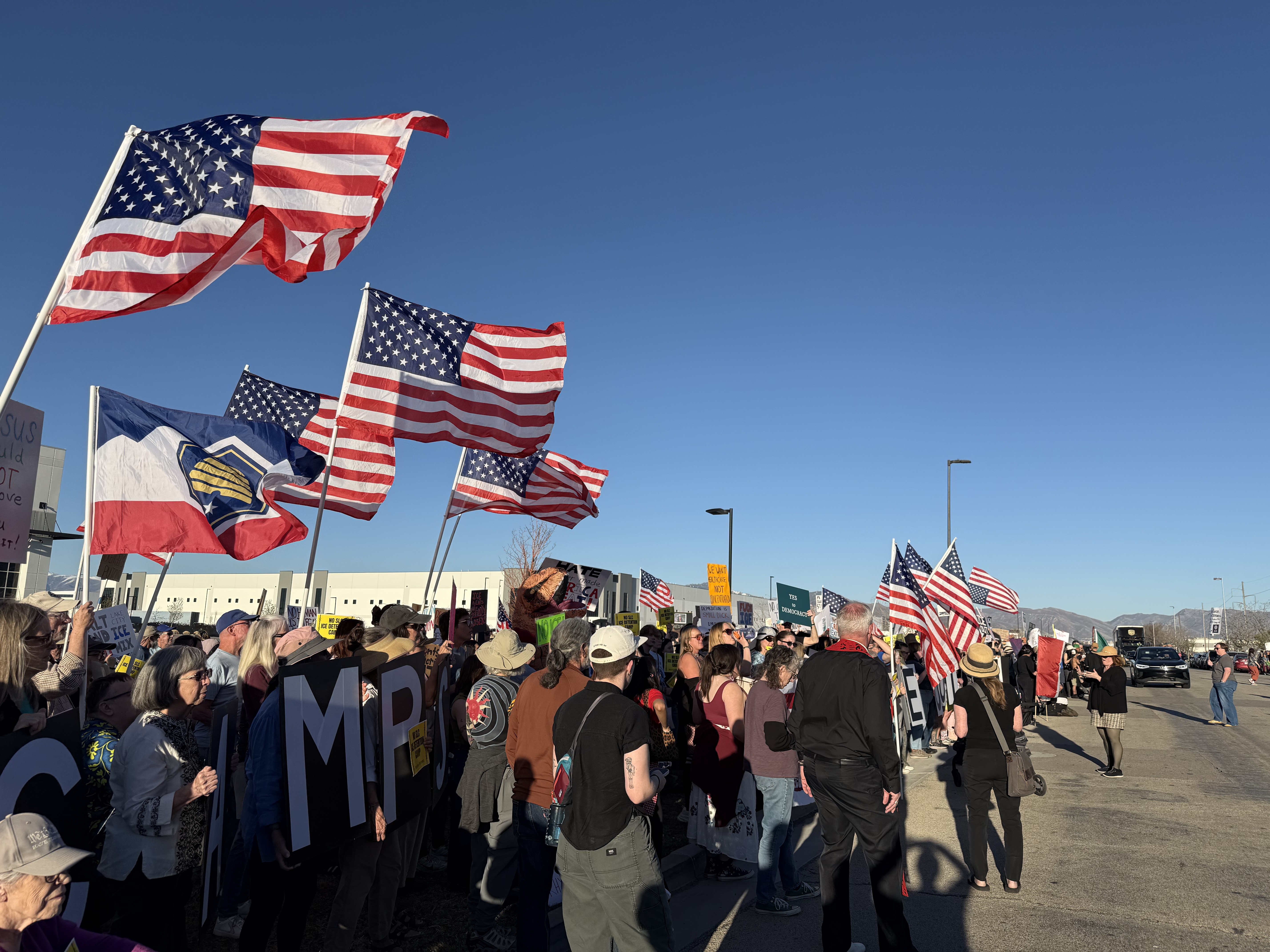
    Yesterday I stood on the far west side of Salt Lake City, staring at a gigantic empty warehouse the Department of Homeland Security bought for $145 million, with plans to turn it into an ICE detention center. A warehouse. Near our airport. In our city. As though human beings are inventory. As though the right word is “facility” and not what it really is: a place built to disappear people behind walls and fluorescent lights.

    Let’s start there. Warehouses are for packages. Not for people.

    Salt Lake City’s mayor has already said what should be obvious to anyone with a pulse: mass detention inside a warehouse is inhumane, outside the city’s zoning allowances, and contrary to the values of Salt Lakers. She is right. Full stop.

    And the obscenity of the timing should make every Utahn furious. Homeland Security has somehow found $145 million to buy an empty building for detention expansion while the department’s own budget fight has left TSA officers working without pay. Tens of thousands of airport security officers have been showing up unpaid, absences have surged, and some airports have faced serious disruptions. So let me get this straight: there is money for cages, money for contracts, money for detention infrastructure, but not enough political courage to pay the people keeping airports running? That is not governance. That is moral failure with a spreadsheet.

    Utah should know better.

    This is a state with a living memory of Topaz, where Japanese Americans were incarcerated behind barbed wire in one of the worst civil-rights violations in this country’s history. They were never charged. Never convicted. Just removed, confined, and treated as a problem to be managed. If you think history repeats itself with the exact same haircut, you have not been paying attention. History comes back wearing a lanyard, holding a procurement document, calling the camp a warehouse conversion.

    And this land was not ours to begin with. The Salt Lake Valley has long been a gathering place for Indigenous peoples. This is the traditional and ancestral homeland of the Shoshone, Paiute, Goshute, and Ute Tribes. We are on borrowed land, whether or not that phrase makes people squirm in their expensive boots. The least we can do is refuse to add one more chapter of sanctioned cruelty to soil that has already held too much.

    Standing there yesterday, I realized something uncomfortable: outrage alone is no longer enough. We know how to chant. We know how to hold signs. We know how to post the photo and go home. But the image that stayed with me was not the rally as it was. It was what it could have been: a living human chain around that building. Bodies linked arm in arm. A fence made of conscience. A line that said, in the oldest language there is, No. Not here. Not in our name.

    I have done this before in other fights. I have put my body where my values were. I have stood in the road for old-growth forests. I have blocked entrances where animals were being tortured in the name of research. I have been arrested for refusing to move while weapons were being built. None of that came from some romance about confrontation. It came from understanding that sometimes the body is the last honest instrument left. Sometimes you do not merely raise your voice. Sometimes you physically interrupt the machinery.

    That does not mean performative menace. It does not mean trying to out-tough the state by dressing like a junior militia and smashing windows. A very small group at the protest seemed to think covered faces, body armor, graffiti, and property damage were the message. They were wrong. Utah will not be moved by cosplay intimidation. Broken glass does not build a broader coalition. It hands the story to the people who would much rather talk about vandalism than detention. I understand the rage. I do. But if your politics make you look like a mirror image of the force you claim to oppose, then you have already wandered off the path.

    What wins here is not theater. It is moral clarity.

    What wins here is grandmothers, veterans, students, clergy, tribal voices, teachers, artists, airport workers, neighbors, and yes, the loudmouth dog mamas too, showing up again and again with enough discipline to make the truth impossible to ignore. What wins here is refusing the lie that this is normal, or necessary, or inevitable. What wins here is making Utah look directly at what is being built and asking: Is this who we are now?

    I do not believe it is.

    I believe Utah can still choose decency over fear. I believe Salt Lake City can reject the idea that people should be warehoused three miles from an airport like delayed freight. I believe we can remember Topaz not as a museum field trip, but as a warning. I believe we can honor this land by refusing to make it host one more machine for disappearing human beings.

    Enough is enough.

    You can build a warehouse. You can hire guards. You can print forms and call it policy. But you cannot make a cage moral by giving it a budget line and a neutral-sounding name.

    Utah has seen this kind of shame before. We do not need a sequel.