Tag: travel

  • Cakes are Steady

    Today was a full day.

    More than that, it was one of those days where I caught myself thinking, I live here. Not because I have an address here. Not because I know every little alley or speak the language. It was something else. I felt seen. I felt loved. I found myself wondering how to make this way of living… stick. How to carry it home with me when I eventually have to leave.

    Mostly, though, I just want to share the moments.

    This morning, on my way to coffee, the boys on our street were busy setting up the stage for tomorrow’s festival. I stopped to tell them they were doing a great job. I also noticed a few places that could use a couple more bolts.

    Now, this is Bali, and we all know everything here is held together by zip ties and prayers. But tomorrow there are going to be lights hanging everywhere, musicians moving equipment on and off the stage all day and well into the night, and those load-bearing supports are going to be asked to do exactly what load-bearing supports are supposed to do.

    So I asked for bolts. And a drill.

    They laughed. I wasn’t kidding.

    I explained what I was thinking as I tightened everything up. It probably would have been just fine. It almost always is. But a few extra bolts now mean everyone sleeps a little easier later. Then I handed everything back, wished them luck, and left them to keep building.

    I wandered into Seniman, which was absolutely packed this morning. I sat on a rocking chair at the counter, smiled at the baristas, and before I even had a chance to think about ordering, my espresso appeared. There are very few things in life better than people who quietly know your coffee order. I thanked all that is holy for espresso, drank it, and today I didn’t linger. I had places to be.

    On my way up the hill I stopped to chat with Gusti at the little warung on the corner. She asked how much longer I’d be here, and when I told her about ten more days she smiled and asked if I was hungry. I reminded her that my homestay feeds me breakfast every morning and that after that I don’t usually want to eat again until much later in the day. I promised I’d stop by before I leave. She seemed satisfied with that arrangement.

    Then it was off to Mikos.

    I hugged Kochang, slipped into my bathing suit, and climbed into what may have been the most perfect pool on Earth today. I floated for a long time doing absolutely nothing except watching the trees.

    Now, you can call me crazy. It won’t be the first time.

    The trees were talking. One would bend ever so slightly. Just a tiny movement. Then another tree would answer back across the garden in exactly the same rhythm.

    Boop. Bop. Bedeeep. Boo beep.

    I know. I know how that sounds. Maybe you’ve heard it, too? That’s what I watched for the longest time. A conversation carried on entirely through leaves.

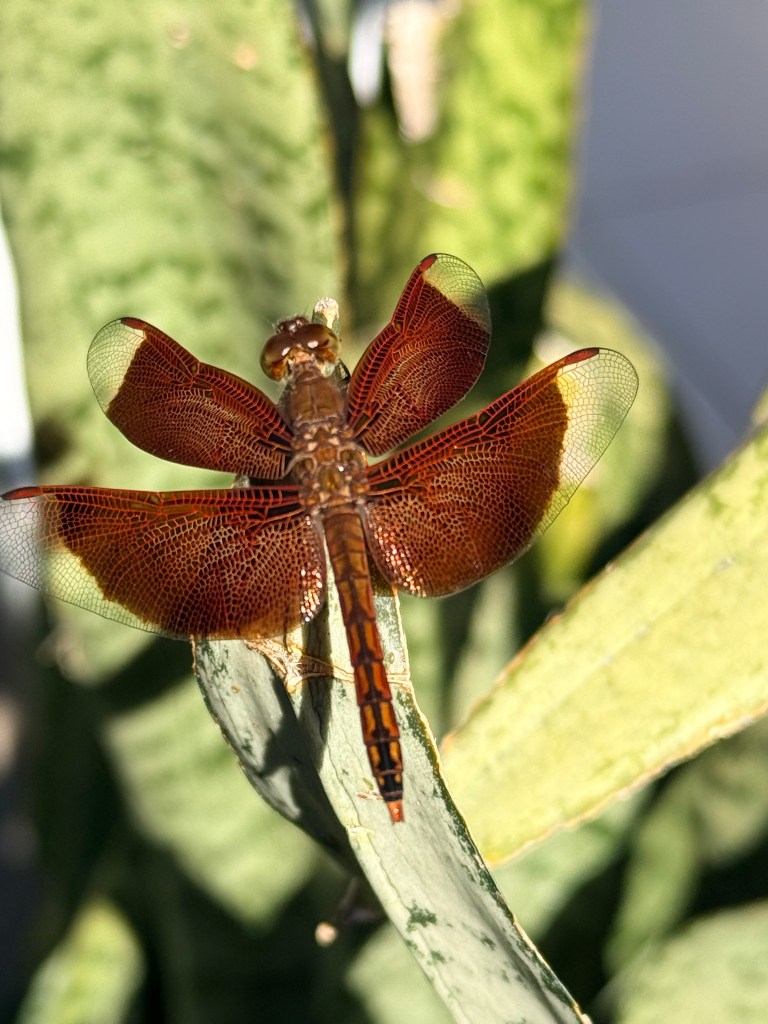
    There were also these bees that looked more like hummingbirds than bees. Huge things. They buzzed around the flowers while I floated there listening to the trees gossip with one another.
    Kochang never seems to remember that I’m rarely hungry. She does always remember that I’m allergic to bananas.

    While I was busy communing with trees and bees, she appeared beside the pool carrying pancakes and watermelon.

    “As a snack,” she said.

    I laughed.

    I’ve secretly been wanting pancakes this entire trip, but almost everywhere here makes them with bananas, so I’ve simply gone without.

    Not today.

    Today I sat on the edge of a swimming pool eating banana-free pancakes with giant bug friends, and honestly, it was glorious.  I am so damn spoiled. 
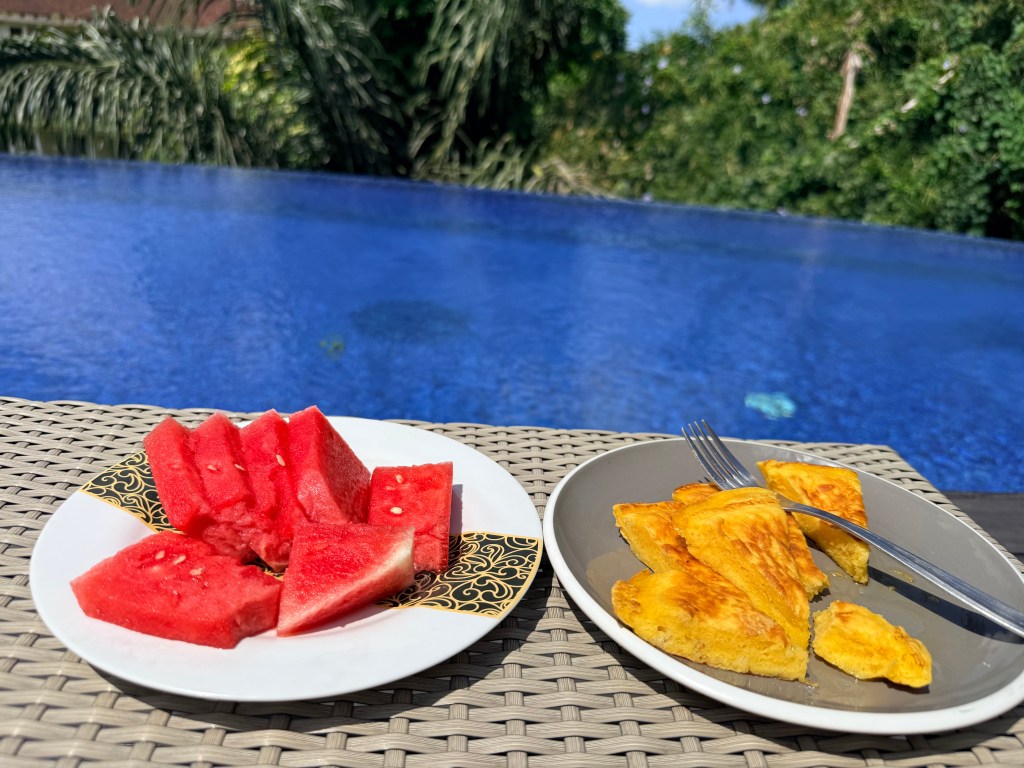
    Eventually I had to wander home because my beet juice guy was waiting for me. I changed back into my clothes, walked down the hill, and checked in on the boys again. By then the stage itself was finished and they were already rigging lights. Keduk walked me through tomorrow’s schedule. The whole village wakes at seven in the morning for a parade. Then come the offerings, the food, more music, and after sunset… the street party really begins. Those are the performances everyone comes out to see.

    The whole street is so proud of this celebration. The boys, especially, have worked so hard to put it all together.  

    I’m proud to be part of it.

    I picked up my beet juice, chatted with everyone there for a while about all sorts of things, carried it home, tucked it into the refrigerator, hung up my wet swimsuit, filled up my bottle with more water, and headed right back out again.

    Kochang was waiting.

    She was taking me to her village for another celebration. I climbed onto the back of her scooter, held onto the back of the seat and off we went into the Friday afternoon traffic towards Penang. 
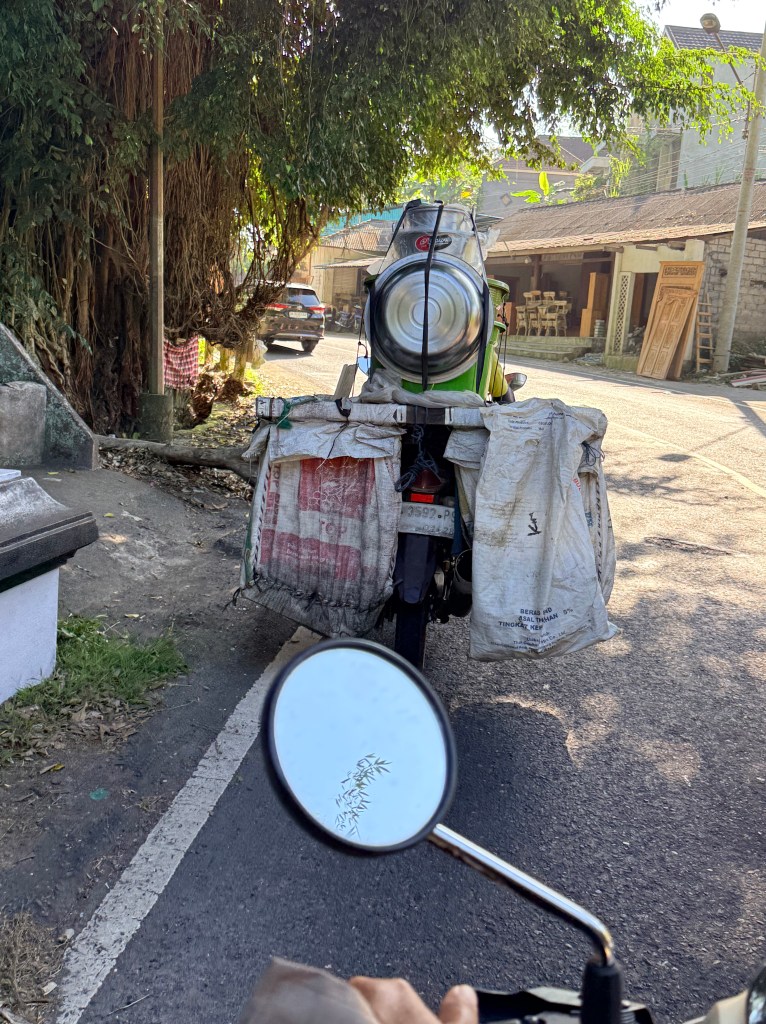
    This is what I really mean when I say I feel like I live here now.

    These invitations don’t feel like they’re being extended to the crazy American woman who’s passing through. They don’t feel performative. They feel genuine. Yesterday I attended one of the most extraordinary cremations I’ve ever witnessed. A beloved priestess had died, and her family and community celebrated her life with so much joy that I couldn’t stop smiling through the tears.

    Today was another celebration of a life well lived.

    As a death doula, I understand this language.

    Here, death isn’t hidden away. It isn’t whispered about. It’s carried. Sung. Cooked for. Prayed over. Celebrated.

    The belief is that the spirit continues its journey toward another joyful life, and I find that breathtaking.

    Life here feels the same way.

    Wake. Give thanks. Share food. Build stages. Help your neighbors. Ride scooters. Laugh. Families don’t scatter here. They gather. For everything. 

    Mothers. Fathers. Daughters. Sons. Grandparents. Aunties. Uncles. Cousins. Great-grandparents. Everybody. Living together. Growing older together. Showing up for one another every single day.

    It’s noisy. It’s chaotic. It’s absolutely bursting at the seams with love.

    LOVE.

    All caps.
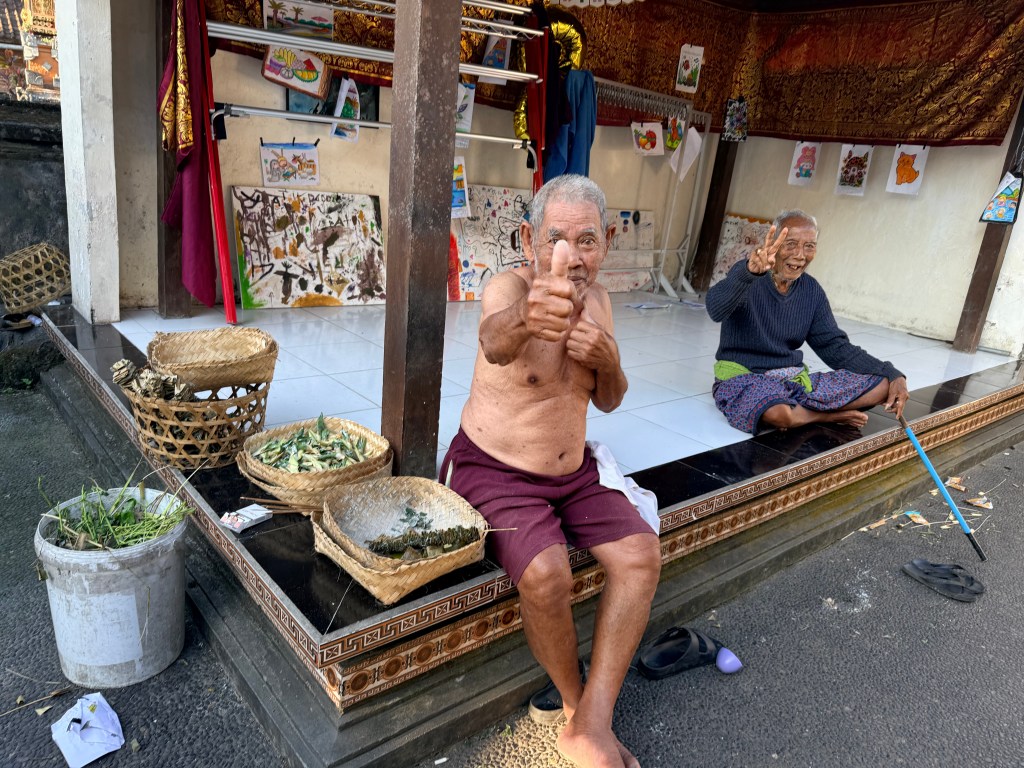
    It reminds me so much of my grandparents’ house in Massachusetts. You never quite knew who was going to be there, but there was always room for one more person at the table. Always another chair to pull over. Always another story being told. Always enough food. Always enough love. 

    Today, sitting beside that pool and later sitting in Kochang’s family compound, I kept asking myself the same question.

    How do I keep this alive when I’m no longer physically here?

    Tomorrow I’ll wake before dawn to help the kids with their festival. 

    Yes. Of course I will.

    Later in the morning, I’m meeting my friend to help with another wedding. Not because I have to. Because I want to. Somewhere in between I’ll sneak into Seniman for espresso, and much later I’ll wander over to Gusti’s for dinner.

    I have this feeling that the biggest thing I’m bringing home isn’t going to fit into my suitcase. It doesn’t have to, though. 

    It’s this slower heartbeat. This softer way of moving through a day. This feeling that maybe home isn’t always a place. Maybe sometimes it’s simply the version of yourself that finally remembers how to arrive and to make certain the cakes are steady. 

    Thanks for coming along. 
  • Hidden Beauty

    I used to think I traveled to see beautiful places.

    Now I think I travel to understand how beautiful places stay beautiful.

    This morning, as I walked to coffee, I noticed that many people on my street were dressed for a funeral.

    I’ve participated in a few funerals here now. They are true celebrations of life, and everyone participates. They are not hushed affairs tucked behind closed doors. Children wander through. Scooters slow down. People smile. Life and death somehow occupy the same street without competing for space.  

    Then I saw the priest.

    He was extraordinary. Like central casting had been handed one simple instruction: Give me a Balinese priest.

    The most beautiful elderly man, with a flowing white beard and long white hair, dressed in robes so impossibly white they seemed to gather the morning light around them. A smile that lit up the entire street and sky and all of our hearts. A beautifully carved wooden cane covered in intricate engravings. I mean…just…wow.

    I didn’t dare take a photograph because it simply did not feel respectful. Later Ring laughed and told me I absolutely could have taken one, but honestly, I was content just to witness him.

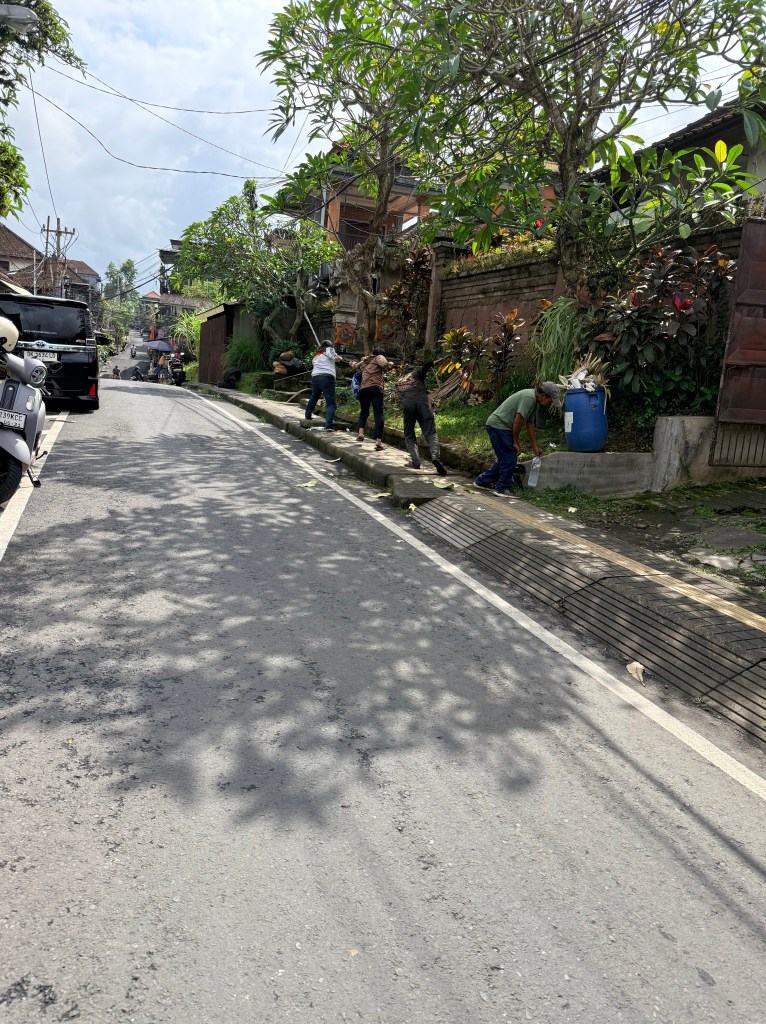
    At exactly the same moment, literally twenty feet away, these boys were fixing the electricity.

    Boys pulling electrical wires in Bali

    I have become completely fascinated by the infrastructure here.

    It isn’t polished or hidden underground where nobody has to think about it. It lives right out in the open where everyone can see it. The electrical wires seem to have a relationship with gravity that is…negotiable. They’re tossed high into the trees. The ladder appeared to be assembled from PVC pipe, duct tape, optimism, and accumulated wisdom.  Also, kind of brilliant because it is easily carried from place to place. Sometimes a zip tie seems to be carrying an unreasonable amount of responsibility. 

    Somehow, it all just works. 

    I also know there are moments when it doesn’t work and everyone simply waits. Nobody stomps around demanding answers. Nobody immediately starts looking for someone to blame. We wait. Someone fixes it. The lights flicker back on and machines go whiirrrr. 

    “Yay, electricity!”

    I’ve started wondering if what I’m looking at isn’t actually electrical infrastructure at all.  I think it is actually human infrastructure.  Plain and simple. 

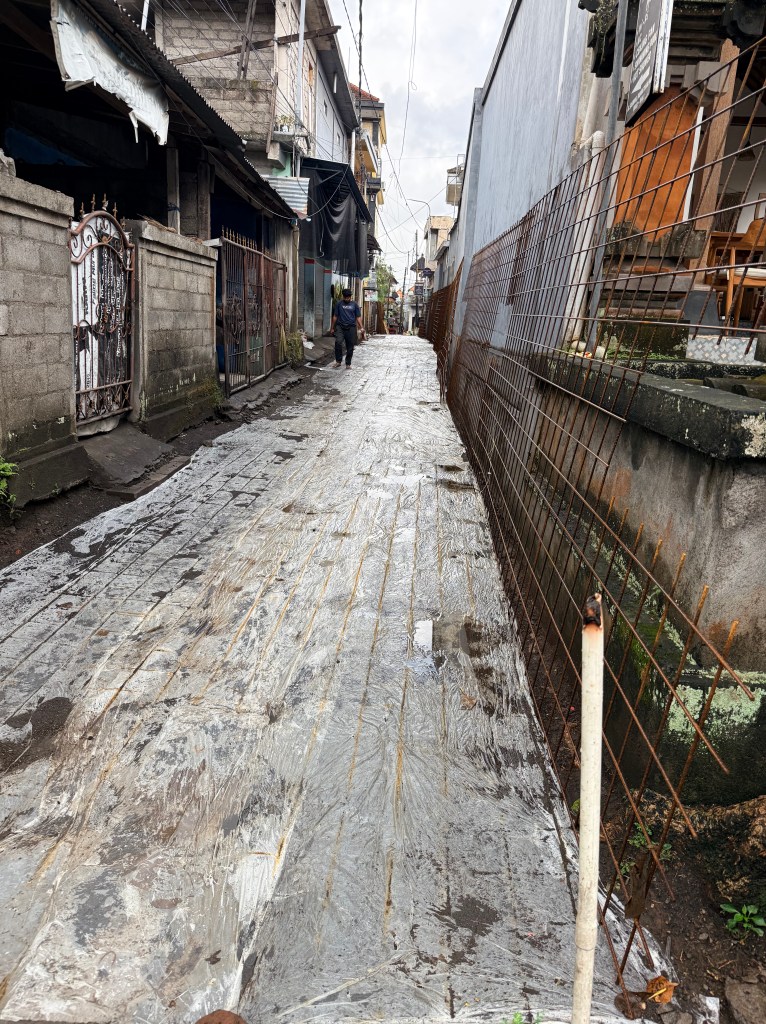
    For weeks now our neighborhood has been building a small road that connects one road to another. I’ve been watching the whole thing unfold one wheelbarrow at a time. First came the digging so the water would drain properly. Then sand. Then glorious rebar, which anyone who knows me understands is practically a love language. Yesterday, between rainstorms, they poured concrete. Today the entire road is covered with plastic sheeting while it cures beneath a brilliant Balinese sun.

    Road construction in Bali neighborhood

    Every day a different group from the neighborhood shows up and every day they all participate together to make this road just a little more road. 

    If Ring is the heart of this family, Bonny may very well be the engine quietly humming underneath it all.

    She designs beautiful clothing. She’s raising children. She’s building an atelier at the front of their compound. And she has her own taro chip business.

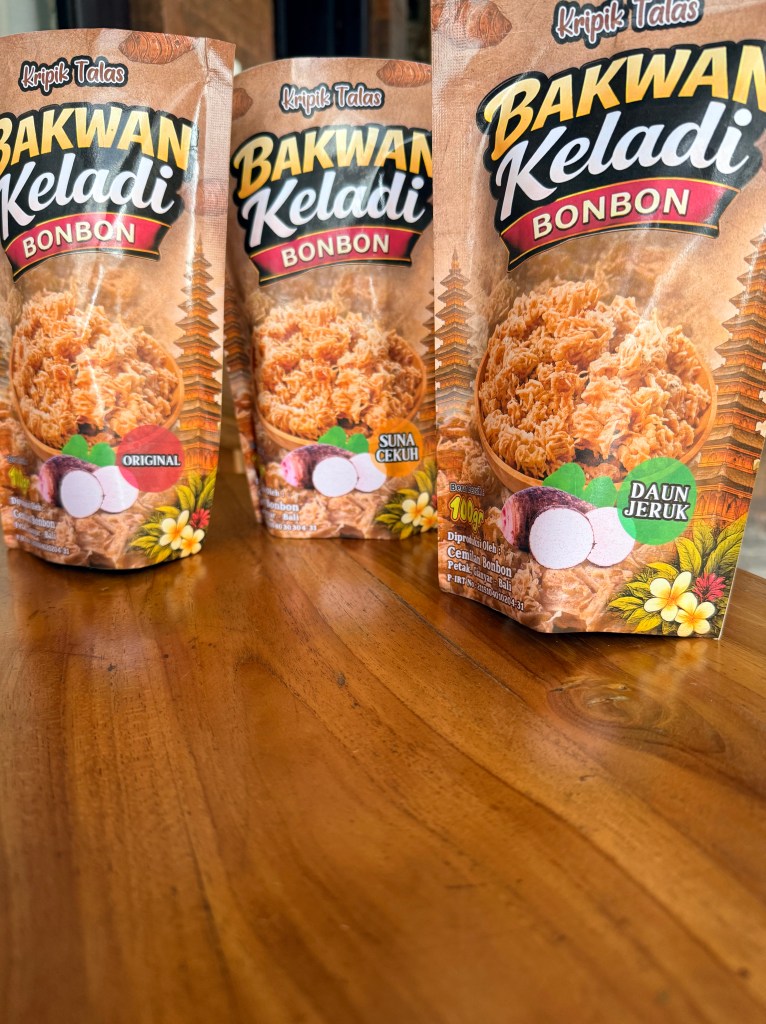
    Three flavors.

    Delicious.

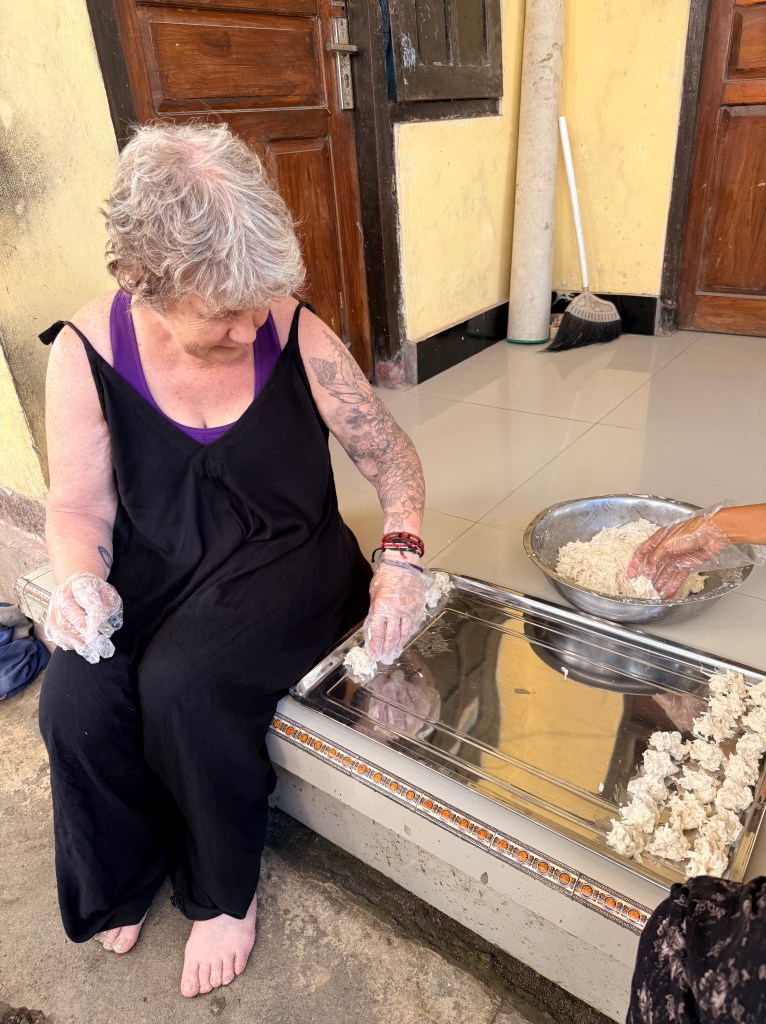
    Nakedjen helping with taro chips

    On Monday, after the beach, she asked me to help.

    Within about five minutes I found myself transported back to my early Clyde’s Cookies days because once you’ve spent years helping small businesses grow, your brain starts seeing possibility everywhere.

    Bonny has managed to get these chips to the point where they are quite popular in her village. People ask for them. They’re served at local events. But after helping her on Monday, I couldn’t stop wondering why they weren’t everywhere.

    This afternoon I wandered into one of Ubud’s biggest souvenir markets carrying Bonny’s taro chips and quite innocently asked where I might find more.

    They didn’t carry any. Not Bonny’s, but not any at all. That seemed odd because Taro Chips are actually a snack time favorite here.  Especially among kids.  The local version sold at the Indomart has a silly Monkey on the package that is also, of course, available as a stuffed animal! 

    BONBON TARO CHIPS
    BONBON TARO CHIPS made in Bali, Indonesia

    The manager and several employees after realizing I was serious about my inquiry were soon opening bags, tasting chips, asking questions, photographing the packaging on their phones while I insisted, perhaps a bit enthusiastically, that they call Bonny directly.

    Not next week. Today. Right now.  Get these chips while you can, people.  Before she makes a deal with Indomart! 

    I made them write down her phone number. I made them take photos of the packaging because everyone here does everything on their phones. I explained that these didn’t just belong in the souvenir section. They belonged in the chip aisle. Why would you fill your shelves with Lay’s when you could be supporting a woman who lives twenty minutes away?

    Here’s the thing I want to whisper into today’s full moon magic: If Bonny sells more chips, she doesn’t simply sell more chips. She hires the aunties in the village who are asking for work. One business becomes several women earning an income. One opportunity becomes many.

    That’s infrastructure too.

    The kind you can’t see from Google Earth.  

    I’ve become the Pied Piper of taro chips this week. I’ve handed them to aunties. To children at my coffee shop. To desk managers at resorts. To strangers. I’m fairly certain I’m now conducting an unsolicited international marketing campaign one crispy slice of taro at a time.

    But really…

    How else is something beautiful ever supposed to travel beyond the edge of the village?

    Everything Happens To Everyone

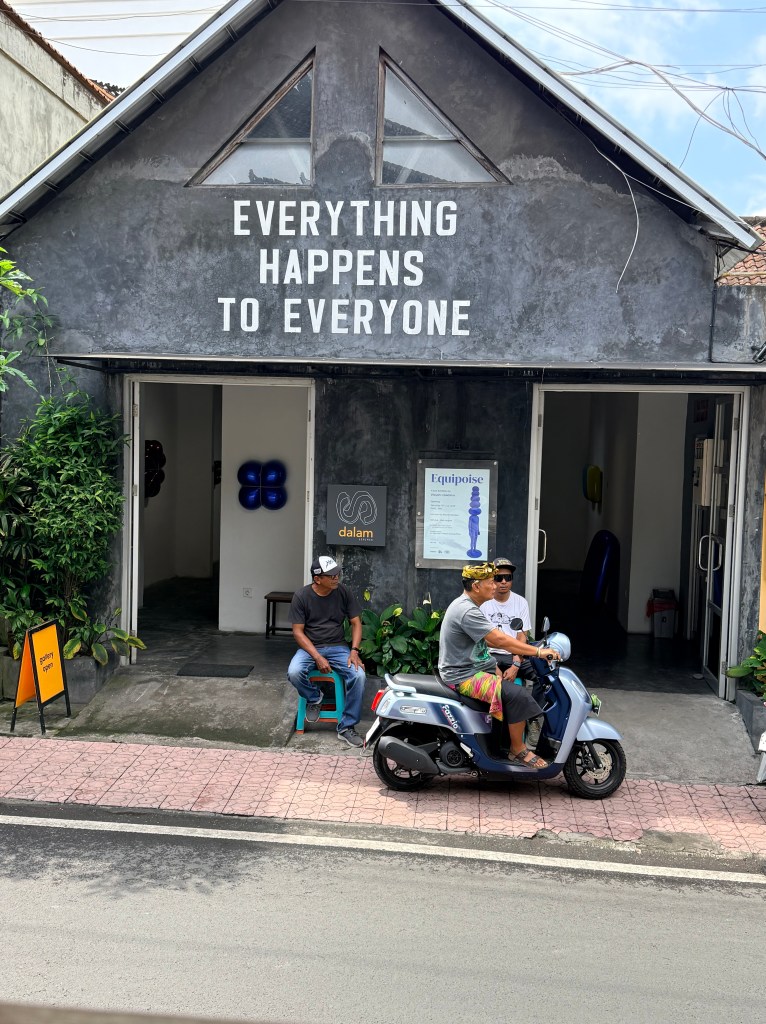
    Earlier today I sat drinking my coffee and the wall on the gallery just across the way had these enormous letters painted across the front.

    EVERYTHING HAPPENS TO EVERYONE.

    I’ve been thinking about that sentence all day.

    Everything does happen to everyone.

    Death. Broken electrical lines. Roads washed out by rain. Businesses trying to grow. Children needing shoes. People looking for work. Joy. Grief. Opportunity. Everything. No, really.  EVERYTHING. 

    The difference, I think, is the infrastructure.

    Not the electrical kind. Or the rebar and steel. 
    The human kind. The people who quietly keep showing up.

    The priest. The boys with the ladder made of PVC and hope. The neighbors carrying buckets of concrete. Bonny. The aunties waiting for work.

    The people who keep beautiful places beautiful.

    I woke up this morning and also booked a flight from Salt Lake City to Jackson, Mississippi. I’ll barely land in Utah, collapse on top of my professor and Clyde and hug both of them fiercely and then I’ll be back on another airplane.

    Different roads. Different people. Different work.

    The details will change. The question won’t.

    Who is quietly holding this place together?

    I’ve started looking for them everywhere.

    The full moon was starting to rise as I walked to get my beet juice this evening and I passed the same boys who had fixed the electrical wires and the aunties I’d stood beside this morning at the funeral. They asked where I was from. 

    “America.”

    They erupted into laughter, dancing in the road, chanting, “O Bam Ma! O Bam Ma!” before proudly pointing to themselves. “He’s ours!”

    I laughed all the way down the road.

    After a day spent thinking about death, infrastructure, and what it means to show up for another human being, it felt like the island had slipped one final gift into my pocket.

    My heart could not help but swell.

  • Catching My Breath in Bali: Embracing True Hospitality

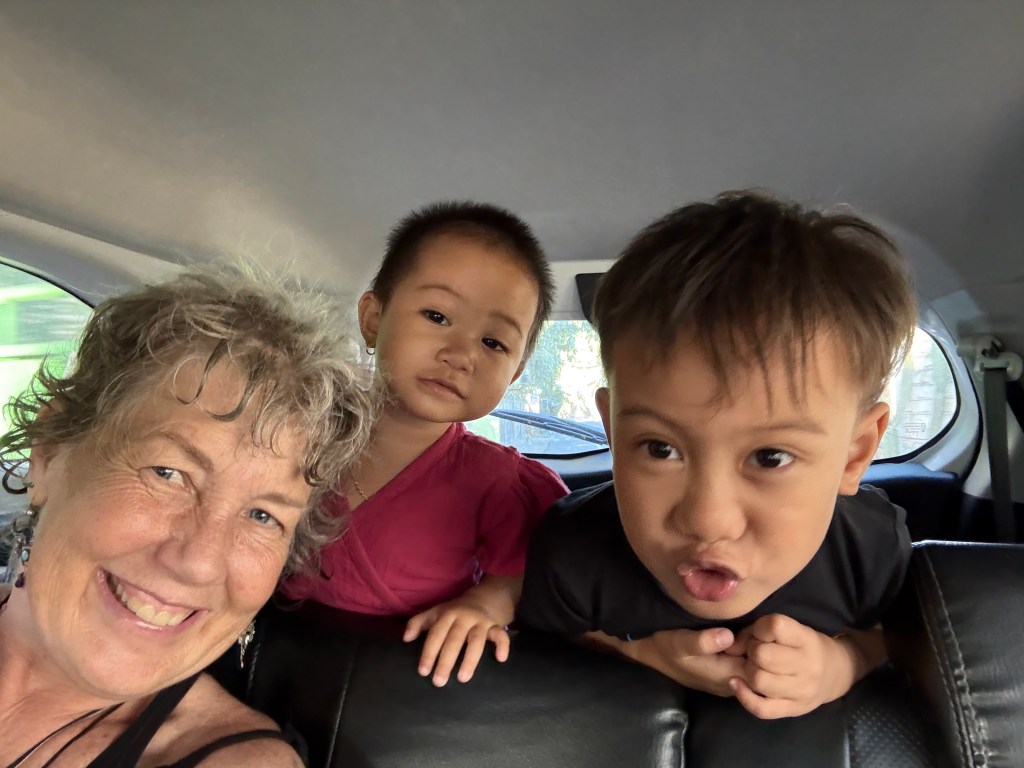
    The Professor said something to me yesterday that I still haven’t been able to shake, we were texting back and forth after I spent the whole day with Ring and his family, and I’d sent him a photo from the backseat of Ring’s car where Ring’s two kids had climbed over the seats to inspect me up close, which honestly felt entirely appropriate — imagine being two or three years old and your dad just casually announces that today you’re bringing home this strange gray-haired American woman with questionable tattoos and an alarming enthusiasm for coffee, and they were completely unfazed by the whole arrangement, didn’t even blink.

    The Professor looked at that photo for about three seconds before he wrote back, “you look different.” Now this is a man who has spent the better part of fifteen years watching my face, he knows every version of me, Festival Jen, Burning Man Jen, Migraine Jen, Grief Jen, the “I’ve had four hours of sleep and somehow we’re still driving with the dogs to Santa Cruz!” Jen — so when he tells me I look different I tend to pay attention. At first I figured he meant happier, or more rested, maybe Bali had finally succeeded where every overpriced moisturizer on earth has failed. Nope. It took me almost a full day to understand what he was actually seeing, which is that I’m breathing. Not metaphorically, not in the inspirational-Instagram-quote way where somebody writes just breathe over a photo of a mountain they’ve never once climbed.  I mean my body has quietly started doing something it stopped doing years ago. I am breathing all the way down into my diaphragm, which is a sentence so absurd I barely believe it myself except my therapist has been trying to convince me of this for years, my friends have been telling me for years, and if I’m being completely honest with you, I don’t really breathe in Utah. 

    That’s maybe the truest sentence I’ve written in a while. I don’t breathe in Utah, I hold my breath there. I hold my breath at the Coffee Garden, which is probably the safest place I’ve ever known — think about how wild that is, Alan and Dieter built this beautiful little sanctuary full of artists and misfits and queer kids and old professors and everybody who’s ever felt like they don’t quite fit anywhere else, and even there, some ancient part of my nervous system remained unconvinced we were safe enough to fully exhale.

    Trauma is such an exacting little bitch. It doesn’t just build memories, it builds posture, it rearranges your shoulders, it decides where you’re going to carry your jaw, it teaches your lungs to negotiate with oxygen like there’s a shortage. It whispers don’t get too comfortable, don’t relax completely, stay ready, something is coming — and the infuriating part is that after enough years you stop even noticing you’re doing it, holding your breath just starts to feel like breathing, you adapt, because human beings are spectacular adapters, we can normalize almost anything if you give us enough time. Apparently we can normalize living on tiny little sips of oxygen. Who knew?!  Not me. Not until Bali.

    Every morning here I wake up before the sun, and I genuinely could not tell you where the sun comes up from on this particular corner of the island because islands are wonderfully confusing that way, ocean over there, jungle over there, temples everywhere, my internal compass has basically shrugged and said good luck. I pull on my Converse and my yoga pants and head out before most of Ubud has even opened its eyes, though the birds have not only opened theirs, they’ve apparently called for a full choir practice, there is so much birdsong here it you wonder if you should start learning the tunes. As daylight begins to break through, the women carrying canang sari, those tiny woven offerings made out of palm leaves and flowers and gratitude and intention appear like apparitions and then the sweeping begins — god, the sweeping, I have become completely enchanted by the sweeping. Every single morning somebody is quietly taking care of something, a doorstep, a temple, a sidewalk, a family shrine, and nobody is doing it for applause, nobody’s particularly interested in documenting it, it’s just what you do before the day starts, you prepare your little corner of the world for whoever might pass through it. I keep wondering what America would feel like if we spent less time yelling at each other online and more time sweeping.

    Yesterday Ring picked me up. Actually — that’s not even true. Yesterday Ring and his family made room for me. Those are two completely different sentences. His wife was there, his two beautiful kids were there, and we drove from Ubud to Sanur for the kite festival and an afternoon at the beach, which is only twenty-seven kilometers away and somehow took three glorious, ridiculous, completely unhurried hours, and if you’ve never been to Bali that probably sounds impossible and if you have been here you’re already laughing. The traffic is legendary, scooters flowing around cars like schools of fish, entire families balanced on one bike in a way that, honestly, makes you HOLD YOUR BREATH, temple ceremonies just appearing out of nowhere, trucks stopping, dogs wandering across the road like they own the place, which, honestly, they absolutely do. Nobody seemed particularly bothered by any of it, least of all Ring, he just drove, and we talked, and the kids climbed over the seats to tell me very important things I only understood about half of, though I’m fairly sure I agreed to several imaginary adventures and possibly promised to play the important role of a superhero at some point.

    The thing that really got me wasn’t even the kite festival, though the kite festival was magnificent, giant creatures sailing across an impossibly blue sky while whole families gathered on the beach cheering them on, joyful in that deeply communal way that feels rarer and rarer these days. But that wasn’t the point. The point happened in the car, somewhere between the villages and the rice paddies and the scooters and the little roadside temples draped in black and white cloth, when it hit me that Ring wasn’t giving me a tour, he was giving me his entire Thursday, his family, his kids, six hours of a life that already belonged to people he loves. He wasn’t spending time on me, he was sharing it with me, and there is a difference so enormous I still don’t quite have the language for it. I’ve spent so much of my life being the one who takes care of everybody else that I almost didn’t recognize what was happening — I’ve been the Fluffer, the doula, the organizer, the woman carrying snacks in her backpack because somebody’s inevitably going to need almonds, the one who remembers birthdays and medications and spare phone chargers and where everybody parked the damn car. I know how to be that person, it’s one of my love languages. What I apparently don’t know how to do is be cared for without feeling like I owe somebody an apology for the inconvenience of it.

    This is exactly what Bali keeps insisting on. Sit down. We’ve got you for a while. Drink your espresso. Walk your ridge. Ride with our family. Breathe. We’ll sweep, we’ll make the offerings, we’ll show you where the ocean is, you just be here. Maybe that’s why I look different in that photo, not because Bali changed me but because for the first time in a very long time my nervous system believes someone else is standing watch, and it doesn’t have to, not today, not for these few precious weeks.

    Maybe that’s what hospitality actually is. It’s not luxury, it’s not five-star hotels or infinity pools or welcome drinks with orchids floating on top, it’s someone quietly convincing your body that it’s finally allowed to exhale. This is what we’ve always done for each other at our very best, long before social media, long before airplanes, long before passports and guidebooks and algorithms and all this noise we’ve built around ourselves — we made room. Around a fire. Around a table. In the backseat of a little car driving across Bali with two curious kids and a man named Ring who probably has no idea he just handed a tired American woman something she couldn’t have found in any guidebook on earth.

    He gave her back her breath.  He let her exhale. 

    Now that… that feels like a story worth carrying home.

  • The Maps Are Written Across Our Hearts

    The Maps Are Written Across Our Hearts

    Every year when June rolls into July, some part of my nervous system starts looking for Interstate exits, and I do not mean this metaphorically, although perhaps I do because the older I become the more difficult it is to separate the actual road from the one that has been unspooling inside me since 1986, that long ribbon of asphalt and possibility and bad coffee and improbable miracles and the certainty that somewhere beyond the next exit ramp there would be music, or friends, or a circus, or a field, or a dog, or a broken transmission, or Jerry Garcia himself sitting quietly at the center of the whole strange wheel asking us all, quite gently, just how much freedom remained in America and whether we intended to use it.

    July has always felt less like a month and more like a tuning fork struck somewhere deep inside the rib cage, because the body remembers before the brain does, and somewhere around the end of June my internal compass begins spinning wildly, looking for truck stops and ticket stubs and glove compartments full of maps that no longer exist, wondering where the circus is setting up this year, where the bands will bandaloop, how many angels can dance on the head of a pin, whether there is coffee at the next exit, whether there is pie, whether there is a field nearby where tired travellers can throw down sleeping bags and look up at the stars and ask one another the really important questions, such as where did the dog go and who has jumper cables and is there an extra ticket and when exactly did we all decide that strangers were dangerous.

    The Grateful Dead taught me one version of America.

    The parking lot was an experiment, a temporary city appearing overnight on asphalt and empty grassy fields and grilled cheese and optimism, a place where money occasionally mattered and occasionally disappeared altogether, where miracle tickets materialized from thin air and somebody always seemed to have an extra sandwich or an extra blanket or room in the van, where your transmission could fall out in Indiana and a garage owner would stay awake all night teaching you how to repair your own car while his wife fed you dinner and you slept in a cornfield beside the garage listening to the stalks whisper like the Pacific Ocean, and where eventually you discovered that gifts do not come with strings attached, that miracles are often folded inside free tickets, that somebody stops when you are broken down, that somebody shares what little they have, that somebody teaches you how to repair the engine instead of repairing it for you, and that no matter where you go, there you are.

    The Oregon Country Fair taught me another version. Same song, perhaps, but a very different verse.

    You entered through the gates and somebody hugged you and stamped a peach on your arm and said, in one way or another, welcome home, and eventually I tattooed that peach onto my own skin because some religions require baptism and some require communion and some simply place a peach upon your arm and send you wandering through the trees with music and art and children and ice cream and impossible ideas about how human beings might live together if they chose kindness over commerce and curiosity over fear, and somewhere beneath those magnificent fir trees you begin to understand that home is not a place at all but a practice, something we make for one another, something we carry, something we offer.

    In the between times, I found another temporary city in the desert, and what it taught me was not terribly different from the parking lot or the Fair. Build the city yourselves. Bring what you need. Share what you have. Somebody always runs out of water. Somebody always loses their camp. Somebody always breaks down. Somebody always sits beside somebody else beneath impossible stars on what feels like a truly impossible precarious piece of art and says, “I’ve got coffee. Tell me what happened.”

    The band plays its final song. The parking lot empties. The Fair does a final sweep. Jerry dies. The dust doesn’t stay. The map disintegrates in the glove compartment.

    This is what I have been talking about all along.

    The maps.

    Not the maps on our phones. Not the blue dot telling us exactly where we are every moment of every day. I mean the old maps. The Rand McNallys folded into impossible shapes and stuffed into glove compartments until the creases finally split. The state lines and county lines and interstates and back roads and roads that simply ended in gravel and dust and faith.

    My maps.

    The weathered notebook that always traveled beside me, filled with health food stores and diners willing to make grilled cheese after ten o’clock and pay phones that still worked and the woman in Eugene with the extra couch and the basement in Ohio that somehow held all of us and the garage in Indiana and the kitchens where we could always make more sandwiches and fill our coolers with ice and beverages before heading back out onto the road.

    The attic in Pittsburgh where a gaggle of filthy hippies once landed and laughed until morning and where years later, after the roads had bent and folded and delivered me back there carrying an entirely different version of myself, somebody I loved quietly helped put me back together again.

    Those were my maps. Not red states. Not blue states. Not electoral maps. My maps are made of people. The people who stopped. The people who stayed. The people who answered the phone. The people who wrote their numbers on the back of a ticket stub. The people who said, “Call me if you need anything.” The people who said, “If you’re ever passing through.”

    I know this is why our Americas all look different.

    Mine looks like parking lots and Oregon forests and dusty roads and kitchens full of soup and coffee and dogs and people making sandwiches.

    Yours may look like a fishing dock off the coast of Maine. A church basement hosting an NA meeting somewhere in the Carolinas. Your grandmother’s porch with a view. A diner serving pie all night at Exit 141. A station wagon headed west. Or East. Or to catch a baseball game in an endless summer of baseball games. Pick-up trucks to pick up a stray dogs because they need a place to call home.

    The shape of our America is the shape of our own hearts.

    The maps are written there.

    The lines still run from mine to yours and from yours to somebody else and from theirs to a frightened stranger standing beside a highway wondering if anybody will stop.

    I really believe that is what the country has always been.

    Not the lines we draw between ourselves.

    The names we write beside them.

    So, here we are. All of us together inside the largest and strangest experiment of them all.

    America.

    Somewhere, probably even right now, somebody is sitting beside a dark highway with their hazard lights flashing. Somebody is lost. Somebody is afraid. Somebody is wondering if anyone will stop. And somewhere else, perhaps only a mile away, perhaps at the next Interstate exit, perhaps sitting at a kitchen table drinking coffee, perhaps reading this very thing by the light from a cellphone at 2:13 in the morning somewhere outside Winnemucca somebody is already reaching for their keys.

    We all have our roads. We all have our lines. We all have our maps.
    And we all have our exits.

    This is another thing the road taught me. You never really know which exit is yours. You pass hundreds of them. Thousands. Rest areas and truck stops and little towns with one blinking light and pie shops and motels and places you promise yourself you’ll visit someday, and then one day you find yourself taking an exit you never expected because your transmission gave out or your heart broke or somebody got sick or somebody died or somebody called and said, “Can you come?”

    We ride with our hands on the wheel and our hearts beating in our chests and we simply do not know. We do not know if the next exit is ours, or the one after that, or the one two thousand miles down the road. That uncertainty is not the frightening thing. It is the reason for everything.

    I do not know where my exit is, and you do not know where yours is, and America herself does not know where hers is, the whole point is simply how we choose to travel. Choose to show up.

    We do stop. We share our sandwiches. We find the lost dog. We answer the phone. We write our numbers in the margins and on the backs of ticket stubs. We make coffee. We put our hands over our own hearts. More importantly, we put our hands on the hearts of others and ask, “Still beating?”

    Babump.

    Babump.

    Still there.

    This? This is what America needs from us right now. Not spectators. Not passengers. Not people standing beside the road arguing over the map while the engine overheats.

    AMERICA is sitting there herself with her hazard lights flashing and one hand pressed against her chest, and perhaps what she is asking is exactly what every frightened traveler has always asked somewhere beside a dark highway in the middle of the night.

    Is anybody coming?

    Yes. We are. Because this is our country. This is our map. This is our heart.

    The lines still run from my heart to yours and from yours to someone else’s and from theirs to a stranger sitting beside a road somewhere wondering whether anybody will stop.

    And someday, though none of us knows when, we will each take our own exit. Maybe tomorrow. Maybe thirty years from now. Maybe somewhere we never expected. Maybe somewhere we’ve been driving toward all along.

    So while we’re here — while the engine is still running and the coffee is still warm and the maps are still folded in the glove box and the names are still written in the margins and the kitchen lights are still burning and the hearts are still beating — we might as well show up.

    We might as well keep each other breathing.

    That’s it. That’s the whole assignment.

    America needs all of us right now. Every last one. And if you call yourself an American — if you put your hand on your heart and mean it — then that means you.

    So pull over. 💜

  • Utah Is on Fire and the Fireworks Are in Aisle Nine

    Utah Is on Fire and the Fireworks Are in Aisle Nine

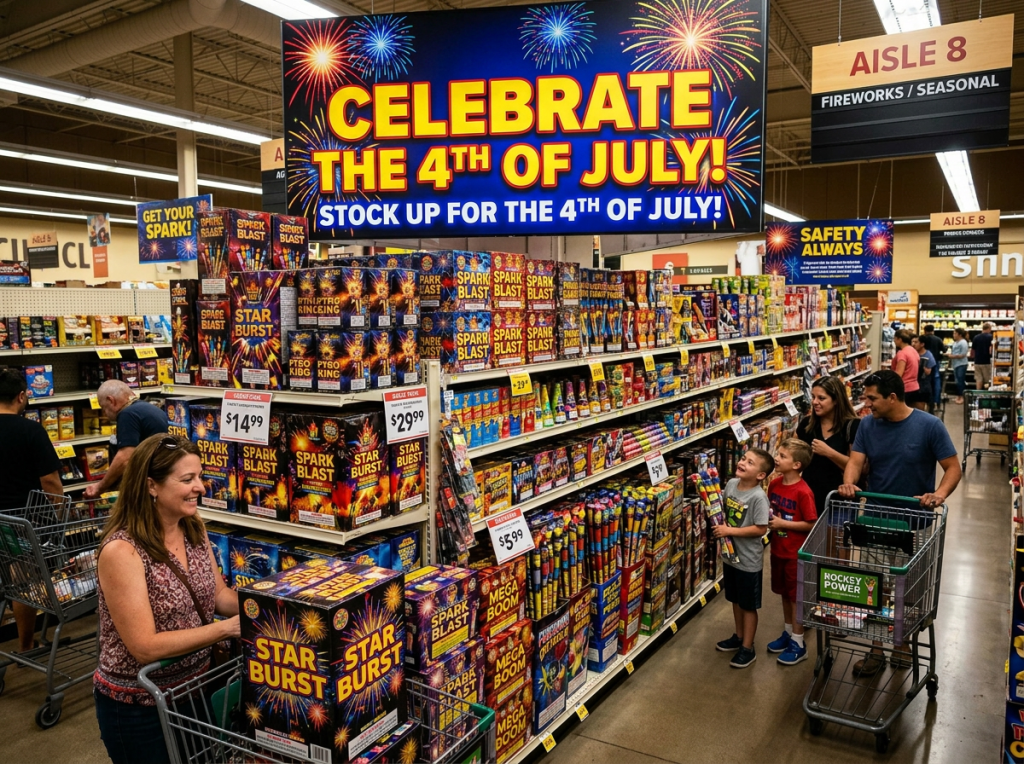
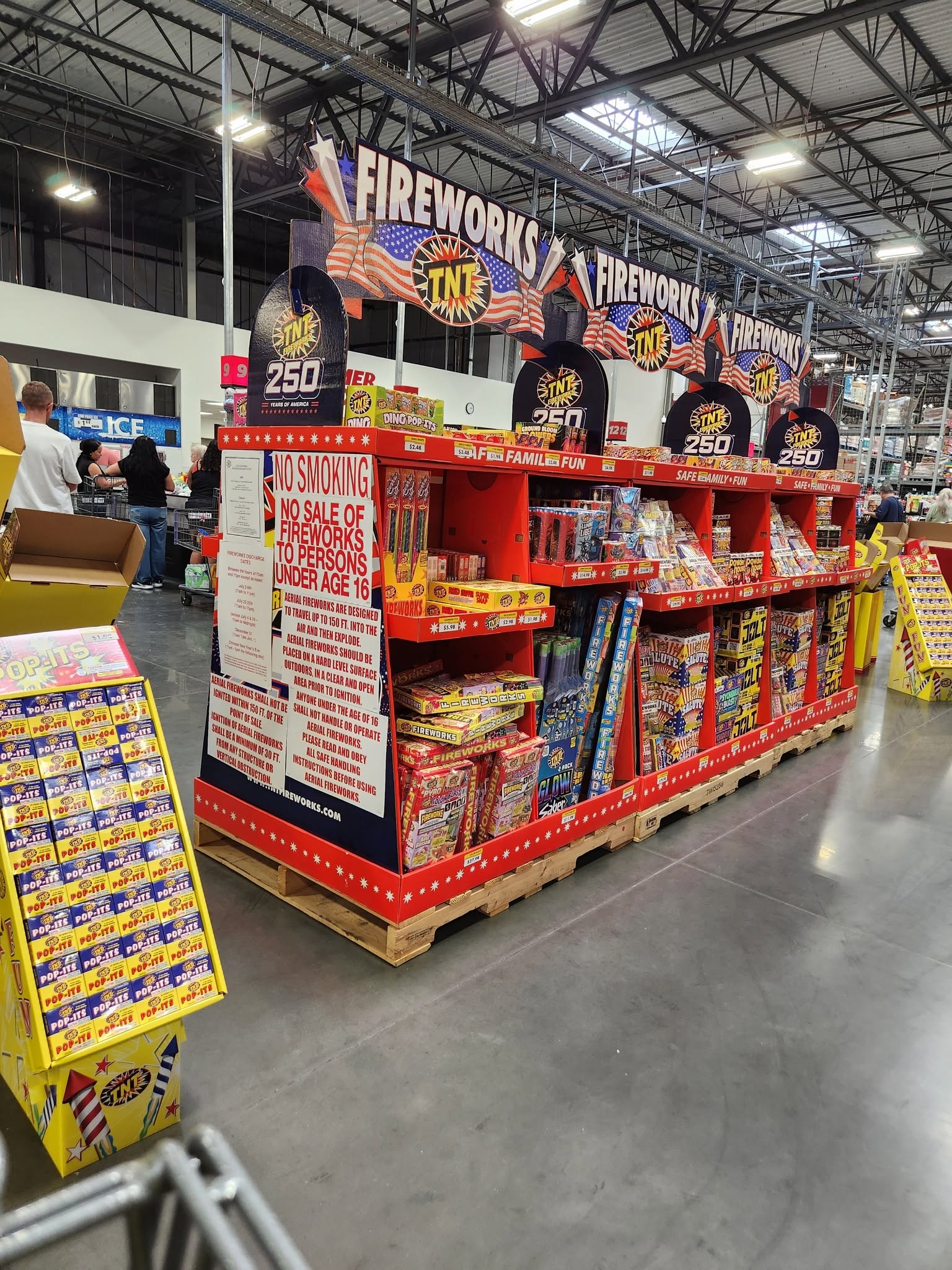
    I have just come home to Salt Lake City and Utah is on fire, and I do not mean this poetically, although honestly, Utah does enjoy making everything biblical and dramatic and vaguely Old Testament in July, so here we are, once again, surrounded by dry grass, hot wind, evacuation alerts, smoke maps, firefighters working themselves into ash-covered saints, dogs hiding under beds, veterans and refugees and babies and every person with a nervous system bracing for the nightly neighbourhood reenactment of “freedom,” while fireworks are stacked for sale in the aisles of the grocery store as if this is perfectly normal, as if this is not the sort of cognitive dissonance that should make all of us stop next to the ice machine and the rotisserie chickens and the family-size tortilla chips and say, wait, hold on, are we really doing this right now?

    Before anyone starts clutching their sparklers and typing with their thumbs full of liberty, I know what month it is, I know where I live, I know Utah in July is not so much a month as a prolonged ignition ceremony with snack breaks, I know we begin with the 4th of July and then we just keep right on going until the 24th when the pioneers allegedly rolled into this valley, wiped the dust out of their eyes, looked around at all this dry, flammable majesty and said, “This is the place,” which apparently, generations later, has come to mean this is the place where we spend most of July scaring the bejezzus out of every dog, every sweet person with PTSD, every baby trying to sleep, every elder trying to remember what quiet feels like, and every canyon full of sweetgrass waiting for one yahoo with a lighter and a pocketful of constitutional fireworks to become the plot twist nobody needed.

    I am not anti-fire.

    Please.

    Let us not be ridiculous.

    I am a Burner, for fuck’s sake, a woman who has spent a good portion of her adult life hauling water and snacks and weird forms of devotion across a dry lake bed where people build impossible things out of dust and scaffolding and crazy grit and love, then set them on fire under the supervision of people who understand wind, perimeter, safety, ritual, consequence, and the very important difference between sacred flame and Chad from down the street launching aerials into a neighborhood full of juniper while declaring himself a patriot.

    I love fire.

    I love the bloom of fireworks in a night sky when they are handled by professionals who know what they are doing and have permits and water trucks and actual plans that do not begin with “hold my beer” and end with the county sheriff asking everyone to evacuate.

    I love spectacle.

    I love celebration.

    I love light.

    I love the crack and shimmer and gasp of it, the moment when a whole crowd looks up together and forgets for three seconds how divided and tired and mean we have all become.

    What I do not love is carelessness dressed up as tradition.

    What I do not love is selling explosives in grocery store aisles while Utah is literally burning in every direction, while we are watching acres disappear, while animals are running, while people are packing medication and photographs and dog food into cars just in case, while firefighters are out there trying to convince the flames not to become weather, while smoke sits in the valley like an unwanted relative who refuses to leave and makes everyone’s lungs feel personally insulted.

    I do not love the part where we ask for help with one hand and sell the problem with the other.

    FEMA has authorized federal funds to help fight the Iron Fire, which is a sentence I find almost darkly comic in this particular American moment, since depending on which political carnival ride you happen to be strapped into, FEMA is either a vital public agency or a government bogeyman hiding under the bed with your tax dollars, but apparently when the hills are on fire we all remember very quickly that mutual aid is not communism, it is what keeps the flames from eating the next ridge.

    And still, here we are, Utah, with the fires burning and the air turning into a throat lozenge from hell, selling fireworks next to the groceries, smiling brightly through the smoke, acting as if we can call something a national emergency and then we spin around and hand out spark boxes with patriotic branding and a coupon for more for the arrival of all those pioneers.

    I do not think we get to have it both ways.

    I really don’t.

    I do not think we get to say we love this place, we love these mountains, we love these canyons, we love this big dry weird holy bowl of a valley, we love our families, we love our neighbors, we love our firefighters, we love our dogs, we love our veterans, we love our freedom, we love our pioneers, we love our heritage, we love our God, we love our country, and then spend the hottest, driest, most flammable weeks of the year treating the entire state as if it is a disposable party favour wrapped in red, white, and boom.

    I know fireworks are legal.

    So are many dumb things.

    Legal is not the same as wise.

    Legal is not the same as kind.

    Legal is not the same as neighbourly.

    Legal is not the same as, perhaps we should not tempt the desert into becoming a funeral pyre just so Kyle can light the “Mega Patriot Screaming Eagle Thunder Dragon 5000” in the cul-de-sac while everyone’s Labrador trembles behind the washing machine.

    This is the part where someone will tell me I am trying to ruin everyone’s fun, which is hilarious, truly, since I am a woman who believes very deeply in fun, possibly too deeply, a woman who has built entire temporary civilizations around coffee, glitter, grilled cheese, electrolytes, radical hospitality, art, dust, nakedness, body joy, and the spiritual necessity of occasionally doing something weird under the stars, but I also believe fun has to survive contact with the actual world, and the actual world right now is hot and dry and on fire and full of living creatures who did not volunteer to become collateral damage in Utah’s annual month-long pyrotechnic identity crisis.

    I am asking for restraint.

    Not forever.

    Not joylessness.

    Not a statewide ban on wonder.

    Just the tiniest little teaspoon of common sense stirred into the Pioneer Day punch bowl.

    Maybe this year, while the fire crews are out there doing the kind of work most of us cannot even imagine, while families are refreshing containment maps, while the air smells wrong, while the mountains stand there looking dry and tired and entirely too ready to go up if we breathe on them funny, maybe we could decide that freedom also includes the freedom not to light shit on fire.

    Maybe we could decide that being a good neighbour matters more than making the sky explode from your driveway.

    Maybe we could decide that dogs and babies and veterans and refugees and exhausted people and traumatized people and firefighters and wildlife and lungs and canyons and whole communities deserve one July where we do not confuse noise with patriotism and sparks with devotion.

    Maybe we could put the fireworks back on the shelf and go eat pie.

    Maybe we could stand outside and look at the mountains, while we still have mountains to look at, and remember that they are already dramatic enough.

    Maybe we could wave a flag without setting the hillside on fire.

    Maybe we could let July be July without turning every night into a tiny war.

    Maybe we could be brave enough, just this once, to celebrate by not making anything worse.

    I know.

    Radical.

    Possibly un-Utahn.

    Someone alert the Governor.

    But here I am, home again, looking at fireworks for sale in the grocery store while the state burns around us, and all I can think is that irony has finally put on boots, walked into the aisle, picked up a box of TNT Pop-Its, and asked all of us whether we have completely lost the plot.

    And honestly?

    I think the answer might be yes.

    But we could still choose differently.

    We could still choose the mountains.

    We could still choose the dogs.

    We could still choose the firefighters.

    We could still choose the air.

    We could still choose not to be the spark.

    Wouldn’t that be something?